A problem-solution essay picks one real problem, argues for a fix, and checks whether the fix would work. The best topics are small enough to study. A student can look into late school buses in one district, but not transport around the world. The 182 problem solution essay topics below are sorted by level and by subject, so you can find one that fits your course.
What is a problem-solution essay?
A problem-solution essay explains a specific problem, argues for one practical fix, and shows how to tell whether the fix worked. Your reader should finish it knowing what to do and why.
Most strong essays follow four parts:
- Situation: Establish who is affected and where the issue occurs.
- Problem: Explain the harm and support your account of its causes with evidence.
- Solution: Identify who would act and what steps they would take.
- Evaluation: Assess the proposal’s costs, limitations, and measures of success.

The problem solution essay topics below fit this structure. Each one points to a situation, a possible fix, and someone who could carry it out.
What makes a good problem-solution essay topic?
A workable topic names a specific problem, an identifiable group affected, and an actor who could implement the solution. “How can we end poverty?” fails all three. “How can a university reduce food waste in dining halls?” passes all three. Scale is the deciding factor: if you cannot name who would act, the topic is too large.
Run any of the problem and solution essay topics in this article through three quick tests:
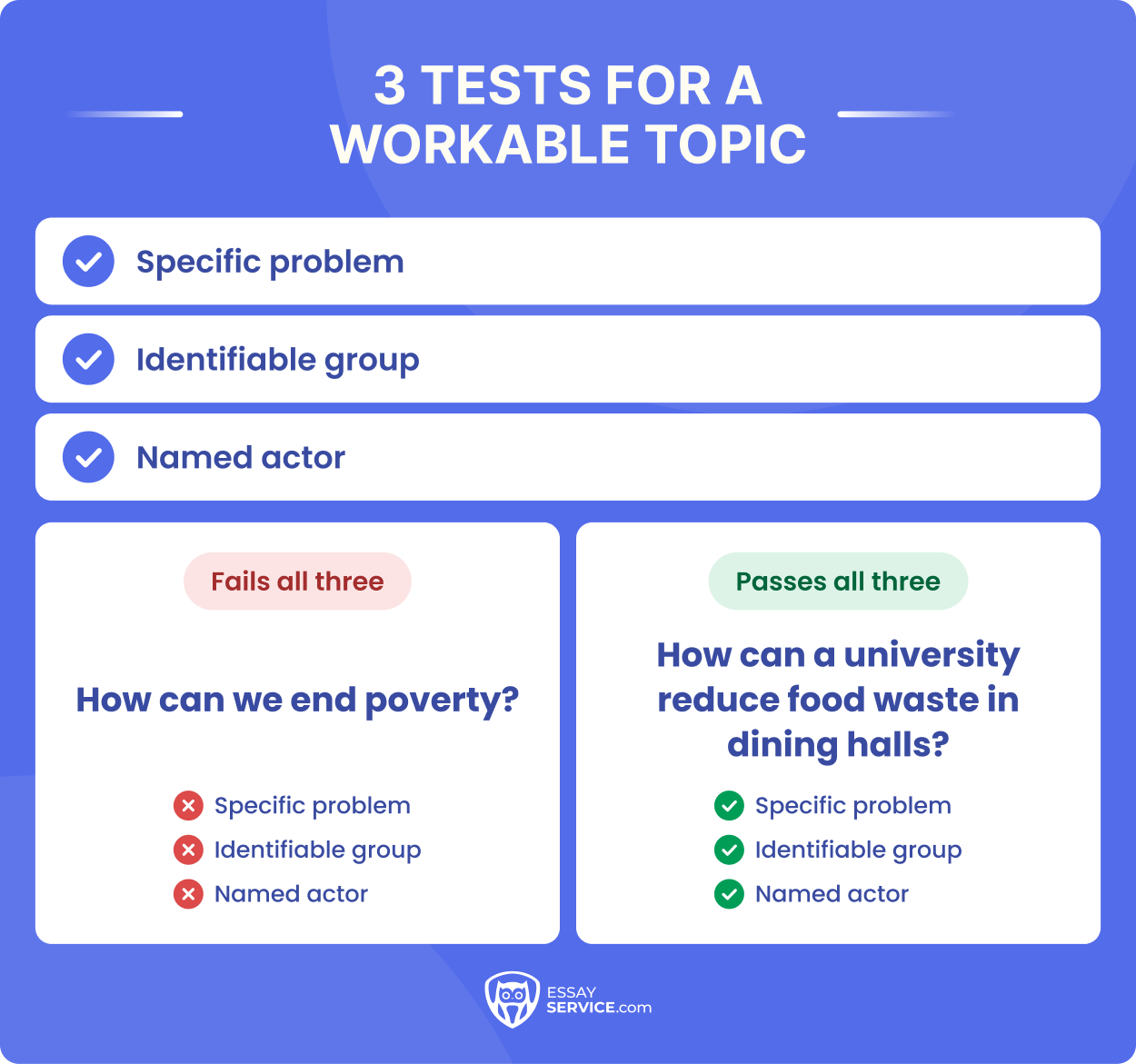
- Specific problem: Can you describe it in one sentence, with a place and a time?
- Identifiable group: Can you say who is hurt by it, and roughly how many people?
- Named actor: Can you name the person or office that could change it, such as a dean, a city council, or a clinic manager?
How do you narrow a problem-solution topic?
Move from the broad issue to a setting, then to a group, then to an action someone can take. Each step cuts away something you cannot research. This is how a vague worry turns into problem solution essay ideas that fit a short paper.
Then turn the question into a working thesis: “An elementary school should stagger arrival times and start a walking school bus to reduce morning drop-off congestion.” If you cannot finish the chain with a person or office that could act, go back one step.


Stuck on the solution?
Our writers can build the outline, find the evidence, and draft your problem-solution essay.
What are problem-solution essay topics by level?
Level decides how big your topic can be and how much evidence you need. Problem solution essay topics for college, for example, often point to a campus office or a state law, while middle school topics stay inside one building. The lists below move from local to data heavy.
Middle school
Middle school topics are immediate and local. Choose a problem you see every week, in a place where students or staff could try a small change.
- Could a middle school reduce crowded hallways by staggering class release times by two minutes?
- Could a lost-and-found system stop students from losing jackets and water bottles each term?
- Could a bike rack and lock program help more students ride to school safely?
- Could a buddy system help new students find friends during their first month?
- Could a lunch seating plan ease crowding in a small cafeteria?
- Could shared rules for playground equipment end arguments at recess?
- Could a student council cut litter on school grounds with a weekly cleanup rotation?
- Could older students teach younger classes about bus safety to reduce unsafe behavior on the bus?
- Could friendly overdue notes sent home reduce the number of missing library books?
- Could opening the building ten minutes earlier for walkers reduce late arrivals?
High school
High school topics work at the scale of a school or a town. The decision-maker is usually a principal, a school board, or a local office.
- Could assigned carpool lots reduce student parking shortages at a large high school?
- Could a student-run food pantry reduce hunger among classmates?
- Could a district that moves high school start times later reduce first-period tardiness?
- Could a town job fair help students find their first summer jobs?
- Could peer-led education work better than punishment in reducing vaping on campus?
- Could in-school registration drives increase voter registration among eligible seniors?
- Could a cap on the number of AP courses per student reduce academic stress?
- Could a school board reduce sleep loss by limiting weeknight games?
- Could a high school make emergency drills more useful by adding a practice plan for each student with a disability?
- Could online appointment booking cut the time students wait to see a guidance counselor?
College
College topics deal with campus offices, university policy, or state law. Look for a dean, a housing office, or a legislature that has the power to act.
- Could a university reduce commuter parking costs through a shuttle partnership with local transit?
- Could a meal-swipe sharing program reduce student food insecurity on a college campus?
- Could paid stipends open unpaid internships to low-income students?
- Could matching surveys reduce roommate conflicts in campus housing?
- Could dedicated advising improve graduation rates among transfer students?
- Could a campus safe-ride program lower late-night safety risks for students?
- Could required financial-aid counseling reduce student loan default?
- Could metering and a residence hall competition cut energy use in dormitories?
- Could peer mentorship reduce academic burnout among first-generation students?
- Should a state legislature cap yearly tuition increases at public universities?
Graduate
Graduate topics need literature and data. Plan to review published evaluations, compare programs, and say plainly where the evidence is weak.
- Could value-based payment models reduce hospital readmissions among heart-failure patients?
- Could early-childhood home visiting programs improve school readiness, and what do long-term studies show?
- Could state carbon pricing reduce emissions without raising costs for low-income households, based on existing programs?
- Could community health worker programs lower emergency room use among patients with diabetes?
- Could mentoring for first-year teachers reduce teacher turnover, judging by published evaluations?
- Could bias audits improve the fairness of algorithmic risk scores in pretrial decisions?
- Could telehealth parity laws improve rural access to behavioral care?
- Could housing-first programs reduce chronic homelessness in mid-sized cities, according to published evaluations?
- Could state pay transparency laws narrow the gender pay gap, according to wage data?
- Could small-class policies in early grades improve reading outcomes for low-income students, and for how long?
What are problem-solution essay topics by subject?
Start with a subject you already follow, then pick the topic where you can name the decision-maker. Each list below is built around one setting and one kind of actor.
Education and student life
Name a grade level and an intervention. School district records and evaluations of comparable programs can help you examine implementation requirements and student outcomes.
- Could confidential reporting systems help middle schools address bullying?
- Could attendance-based early-warning systems help high schools prevent students from dropping out?
- Could targeted small-group instruction improve elementary students’ reading skills?
- Should colleges expand open educational resources to reduce textbook costs?
- Could accessible digital course materials improve accommodations for students with dyslexia?
- Could supervised teaching practice better prepare teachers to support multilingual learners?
- Could community mental health partnerships expand high school counseling access?
- Could flexible conference times increase parent participation in elementary schools?
- Could high-dosage tutoring help districts close algebra achievement gaps?
- Should districts revise attendance boundaries to relieve classroom overcrowding?
- Could paycheck simulations help high school students learn budgeting?
- Could introductory courses with no prerequisites expand girls’ participation in computer science?
- Should schools eliminate participation fees to expand access to extracurricular activities?
- Could structured peer discussions reduce isolation in online college courses?
Health and mental health
Define a patient population and a specific barrier to care. Evaluate how the proposed response would affect affordability, staffing, safety, or access, including any resources needed to sustain it.
- Could mobile clinics expand primary care access in a rural county?
- Could simpler hospital financial assistance applications reduce eligible patients’ medical debt?
- Could predictable scheduling help a hospital reduce nursing shortages, and what limitations would remain?
- Could county-funded transportation help patients reach opioid use disorder treatment?
- Could family-based childhood obesity programs improve access to treatment at pediatric practices?
- Could regular hand-hygiene feedback help hospitals reduce healthcare-associated infections?
- Could state-funded home visits improve access to postpartum care?
- Could telephone appointments improve care access for patients with unreliable internet?
- Could longer vaccine counseling appointments help pediatricians address parents’ concerns?
- Could home blood pressure monitoring improve hypertension management at community clinics?
- Could professional medical interpreters reduce communication errors in hospitals?
- Could barcode verification reduce dispensing errors at community pharmacies?
- Could individualized mobility assessments help nursing homes prevent resident falls?
- Could a care coordinator improve follow-up for primary care patients who screen positive for depression?
- Could neighboring county health departments improve outbreak detection by sharing disease reports?
- Could hospitals in one state lower drug shortages through joint purchasing?
- Could a local health nonprofit reduce household smoke exposure in one district by subsidizing cleaner cookstoves?
Environment
Identify a specific source of environmental damage and an organization with authority to address it. Consider maintenance, enforcement, and local conditions when evaluating a proposed intervention.
- Could coastal cities reduce plastic entering the ocean through storm-drain capture systems?
- Should drought-prone communities limit lawn irrigation to conserve water?
- Could beef importers address Amazon deforestation through purchase traceability requirements?
- Could electronics manufacturers increase e-waste collection through take-back programs?
- Should cities establish buffer zones between new industrial facilities and homes?
- Could cities reduce heat exposure by planting trees in low-canopy neighborhoods?
- Could state incentives make community solar subscriptions more accessible to renters?
- Should state transportation agencies build wildlife crossings at animal-collision hotspots?
- Could city-funded home weatherization reduce residential energy use and emissions?
- Would expanded state vehicle inspections meaningfully reduce traffic-related air pollution?
- Could fisheries regulators address overfishing through monitored catch limits?
- Could clothing companies reduce textile waste through repair programs?
- Could weekly meal planning help households reduce food waste?
- Could clearly labeled collection stations improve recycling accuracy in schools?
- Could utilities identify household water leaks earlier through smart-meter alerts?
- Could a farmers’ cooperative reduce grain losses after harvest through shared sealed storage?
- Could a village water committee keep wells working by collecting local maintenance fees?
- Could port authorities limit invasive species through ballast-water inspections?
Technology and social media
Pick one platform, device, or data practice, and name who controls it. Strong topics point to a company, school, or agency that could change a setting or a rule.
- Could social media platforms reduce the spread of false health claims by adding warning labels to flagged posts?
- Could app stores reduce minors’ exposure to harmful content by requiring age checks?
- Could banks reduce phone-scam losses among older adults by adding a warning pause before large transfers?
- Could role-based access controls help healthcare providers protect patient records?
- Could video platforms reduce late-night viewing among teens by turning autoplay off by default?
- Could public libraries build digital skills among older adults through free classes?
- Could a short media literacy unit help students spot manipulated images?
- Could a city narrow the digital divide by lending Wi-Fi hotspots through public libraries?
- Could game companies reduce spending by minors through default limits and parental controls?
- Could a small business protect customer data by requiring two-factor login for all staff?
Work and money
Choose a worker group, an employer or agency, and a rule that could change. Think about cost, enforcement, and what data would show the change worked.
- Could a city pilot monthly cash payments for families at risk of eviction?
- Could a state labor agency curb illegal recruitment fees for migrant farm workers through licensing and penalties?
- Could a state licensing board speed up credential recognition for refugee nurses and teachers?
- Could a state revenue department reduce unpaid taxes among gig workers by requiring platforms to report payments?
- Could a state agriculture department help small farms pass export certification?
- Could clearer pay-stub rules reduce wage theft among restaurant workers?
- Could community banks reduce payday-loan use by offering small-dollar loans at fair rates?
- Could limits on after-hours email reduce burnout at a mid-sized company?
- Should a state require paid sick leave to keep ill workers from coming to work?
- Could apprenticeship programs at community colleges lower youth unemployment in one region?
- Could a city help young renters build credit by reporting on-time rent payments?
Transportation and cities
Identify the travelers affected and the agency responsible. Travel time, crash rates, service reliability, and household transportation costs provide useful criteria for comparing proposals.
- Could city congestion pricing reduce peak-hour downtown traffic?
- Could dedicated bus lanes improve transit reliability on a congested corridor?
- Could protected intersections reduce conflicts between cyclists and turning drivers?
- Should school districts prioritize electric buses on routes with high diesel exposure?
- Could faster elevator repairs improve wheelchair access across a transit network?
- Could raised crosswalks reduce pedestrian injuries near neighborhood schools?
- Could employer-funded emergency rides home encourage employee carpooling?
- Could revised airport taxiing procedures reduce aircraft ground fuel use?
- Could demand-responsive shuttles improve access to medical appointments in rural counties?
- Should cities require monthly safety reporting from autonomous vehicle pilot programs?
- Could secure bicycle parking at transit stations help commuters combine cycling with rail travel?
- Could employer transit benefits reduce workers’ commuting costs?
- Could shared charging stations expand electric vehicle access for apartment tenants?
- Could coordinated freight scheduling help delivery companies reduce empty truck miles?
- Could demand-based meter pricing reduce time spent searching for downtown parking?
- Could a coastal county make storm shelters accessible to residents with disabilities?
- Could a rural school district raise secondary school attendance by running a safe bus route for students who live far away?
Politics and civic life
Identify the relevant level of government and check its authority to act. Political proposals also need clear implementation procedures, especially when they affect representation, public spending, or individual rights.
- Could competitive bidding requirements reduce corruption in city procurement?
- Could automatic voter registration increase turnout in a selected state?
- Could searchable city budget portals make public spending easier to scrutinize?
- Could citizens’ assemblies ease polarization over a specific local policy dispute?
- Could risk-limiting audits improve election offices’ detection of incorrect vote-count outcomes?
- Could district-based municipal elections improve minority representation in a selected city?
- Could state donor-disclosure requirements improve transparency around outside political spending?
- Could independent redistricting commissions reduce partisan bias in a state’s legislative maps?
- Could a city police oversight board improve public trust by publishing case-status updates?
- Could municipal public campaign financing lower entry barriers for first-time candidates?
- Could cooling-off periods reduce conflicts of interest when former officials become lobbyists?
- Could enforceable complaint-response deadlines improve public trust in a city agency?
- Could remote testimony expand participation in state legislative hearings?
- Could timely election-office updates limit confusion caused by false voting information?
- Could trained moderators improve the quality of discussion at community political forums?
- Could a city council strengthen climate accountability by requiring an annual public progress report?
- Could a city youth program reduce gang recruitment in one neighborhood through mentoring and after-school jobs?
For a focus on courts, policing, or corrections, explore these criminal justice topics.
Culture and ethics
Identify whose rights or interests are involved and the principles guiding your argument. Explain how the proposed procedure would handle a specific conflict, including who would hear complaints or enforce decisions.
- What consent procedures should fashion brands use when licensing Indigenous cultural designs?
- Could structured interviews reduce racial discrimination in hiring?
- Could facilitated library discussions strengthen understanding between local cultural communities?
- Could intergenerational teaching programs help communities preserve endangered languages?
- Could standardized product disclosures make retailers’ environmental claims easier to assess?
- Should states require explicit consent for sales of sensitive location data?
- Could supplier grievance systems help brands address worker exploitation?
- Could visible corrections policies improve newsroom accountability?
- Could skills-based promotion criteria reduce workplace age discrimination?
- What consent safeguards should research institutions require for human gene-editing trials?
- Could independent supplier inspections improve food companies’ animal welfare practices?
- Could classroom case discussions improve students’ ethical decision-making?
- How should public universities address targeted harassment while protecting First Amendment rights?
What are problem-solution essay topics for 2027?
These topics come from issues that schools, cities, and employers are dealing with right now. Check each one against fresh sources before you commit, because rules and numbers change quickly in these areas. These problem solution essay topics were chosen for 2027.
- Could a school district set clear rules for when students may use AI tools on assignments, and how would teachers enforce them?
- Could job applicants be better protected if employers had to disclose when AI screens résumés?
- Could summer learning programs help districts recover reading losses that began during the pandemic?
- Could a city lower housing costs for young workers by allowing small apartments near transit?
- Could community centers reduce loneliness among young adults who mostly socialize online by hosting regular in-person events?
- Could a county mental health agency shorten waitlists by adding group therapy sessions?
- Could a state support local news through tax credits for subscriptions?
- Could a utility reduce summer grid strain by paying customers to cut power use at peak hours?
- Could locked phone pouches make a school phone ban work better than teacher enforcement?
- Could school districts protect students during wildfire smoke by setting clear air-quality rules for outdoor activities?
What are easy problem-solution essay topics?
Easy topics start in places you already know, such as your dorm, your class, or your kitchen. You can see the problem yourself and test a small fix. These problem solution essay ideas still need support, so back personal examples with evidence about the approach you recommend.
- Could weekly assignment planning help students reduce missed deadlines?
- Could graduated rehearsal help students manage presentation anxiety?
- Could a shared chore schedule reduce disputes between roommates?
- Could a fixed wake-up time improve college students’ sleep consistency?
- Could shared assignment calendars help teachers prevent homework overload?
- Could regular library visits encourage recreational reading among children?
- Could batch cooking help students prepare affordable, balanced lunches?
- Could scheduled walking groups help beginners maintain an exercise routine?
- Could device-free meals help families reduce recreational screen time?
- Could a quiet-space booking system reduce students’ study interruptions?
- Could agreed quiet hours help apartment residents resolve noise complaints?
- Could backyard composting help households keep food scraps out of the trash?
- Could spaced retrieval practice improve students’ preparation for exams?
- Could labeled storage zones help roommates keep shared spaces organized?
- Could bill reminders help young adults avoid late fees?
Need your essay done by the deadline?
Tell us your topic and due date, and an expert will write a clear, well-argued paper for you.
Which problem-solution topics should you avoid?
Avoid any topic where you cannot name who would act or what you could measure. Five kinds of topics cause the most trouble:
- Problems with no identifiable actor. If no person, office, or group could carry out your fix, the essay has nowhere to land.
- Global issues at essay scale. War, climate change, and world hunger cannot be solved in a few pages. Pick one local piece of them.
- Problems where the solution is already universally agreed. If nobody disputes the fix, there is nothing to argue.
- Topics that need data you cannot access. Check for public reports, studies, or records before you commit.
- Questions phrased as “how can we.” The word “we” is nobody in particular, so the solution has no owner. Name the school, city, or agency instead.
Final words
A good problem-solution essay starts with a problem small enough to study. Name the group that is hurt, name the person or office that could act, and say how you would judge the result. Use the lists above by level or by subject, then narrow your pick until it passes the three tests. If you have found your problem but still need a hand with the solution, our essay writing services can guide you from outline to final draft.
Frequently Asked Questions
What are good problem-solution essay topics?
How do you choose a problem-solution topic?
What are easy problem-solution essay topics?
What’s the difference between a problem-solution and a cause-and-effect essay?

Anna has been helping students become more productive learners for 20+ years now. Her experience, combined with a Master’s degree in psychology, ensures her blog posts contain only valuable insights.


New posts to your inbox
Your submission has been received!