Informative speech topics turn a broad subject such as “technology” into something you can explain: “what happens to a file when you delete it.” They give listeners a process, system, trend, or behavior to understand, rather than a position to support. The 150 topics below are grouped by subject and level, with guidance on speech length, research, and organization.
Start with a question you would genuinely like answered. A familiar action can hide a whole system; your job is to make that system visible without trying to explain everything around it.
How do you choose an informative speech topic?
Workable informative speech topics for college have a boundary and an explanation path. Try moving from “online shopping” to “how same-day delivery changes purchase decisions.” Before researching, see whether you can outline the process, find credible evidence, and explain it within your time limit.
Follow one possible topic through these five checks:
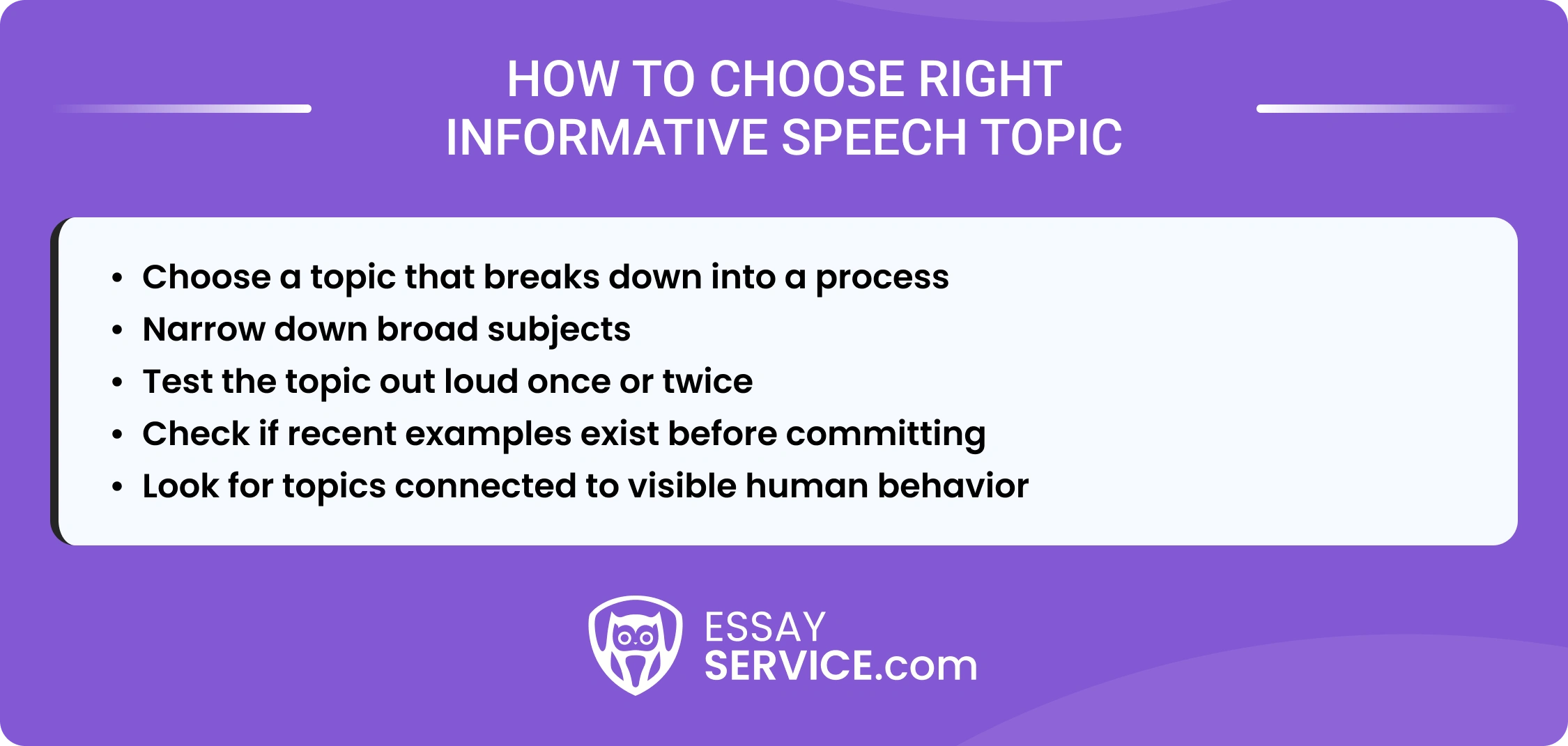
- Choose a topic that breaks down into a process: Begin with food delivery. Ordering, restaurant preparation, and driver dispatch give the speech a sequence instead of a collection of observations.
- Narrow down broad subjects: Pick one part of that sequence: “How delivery apps estimate arrival times.” Now you have a specific mechanism to investigate rather than an entire industry.
- Test the topic out loud once or twice: Try this sample learning objective: “Listeners will understand how an app produces and updates a delivery estimate.” If you also promise to explain restaurant economics, your topic has expanded again.
- Check whether recent examples exist before committing: Find current documentation for the app you choose and independent evidence for any claims about its performance. Changing subjects need current sources; historical subjects need reliable scholarship.
- Look for topics connected to visible human behavior: Repeatedly checking a delivery estimate gives you a familiar action for an opening; the explanation of the estimate gives the speech its substance.
Our writers at our essay service can help develop an assignment around a focused topic and a clear outline.
How long should an informative speech be?
A common college assignment for informative speech topics is a five- to seven-minute. At a planning pace of 125–150 spoken words per minute, that gives you approximately 625–1,050 words. Your instructor’s limit takes priority, and rehearsal must include pauses, demonstrations, and audience reactions.
Silent rehearsal can make a draft seem to fit when the full presentation does not. During the presentation, you might stop to explain a diagram, lose your place, and rush the final point as the timer runs out. Practice the presentation, not just the words.
For a five-minute speech, three or four strong sources are a useful starting point unless your assignment specifies a different number. A simple outline is:
- Introduction: 30–45 seconds. Introduce a concrete example, define the topic, and preview your points.
- Body: about 3½–4 minutes. Explain two or three points in a logical order, using evidence and examples.
- Conclusion: 30–45 seconds. Summarize the explanation and return to the opening example.
Treat the suggested lengths below as planning guides, not permission to cover every detail.


Your Draft, Only Stronger
Get help refining your paper so every section sounds clear, focused, and ready.
What are current informative speech topics?
Current informative speech topics for college examine recognizable changes in studying, spending, travel, and daily routines. These titles offer starting points; check current sources for the specific product, institution, or practice you discuss. A question-based title still needs an explanation, not a yes-or-no verdict.
Suggested length: 5–7 minutes.
- Why are students treating AI like a second notebook?
- Cashless school events and the hidden problem of access
- How short video tutorials became the first stop for quick learning
- Are phone-free retreats a serious answer to screen fatigue?
- Food delivery apps changed the way people plan dinner
- Why printed books feel useful again in a screen-heavy day
- Sleep tourism turns rest into a travel goal
- How does climate anxiety shape students' plans for the future?
- Why do influencer recommendations feel so believable?
- Micro-apartments reveal how expensive city life has become
For a sleep-tourism opening, imagine a traveler choosing a hotel not for sightseeing but for its sleep package. Follow that decision into what the hotel promises, then compare those promises with sleep research. The package illustrates the trend; evidence supports the explanation.
5-minute informative speech topics for college
Noise-canceling headphones offer a compact explanation: microphones detect surrounding sound, and the headphones generate sound designed to counter it. This works especially well with steady background sound, giving you a mechanism and a useful boundary to explain.
Suggested length: 5 minutes. Choose two or three main points and one concrete example.
- How grocery store layouts encourage shoppers to pass more products
- How noise-canceling headphones reduce steady background sound
- How movie trailers introduce a story without revealing its ending
- Why embarrassing memories return long after an event
- How vending machines recognize payments and dispense products
- What researchers know about yawning and contagious yawning
- What makes a logo recognizable at a glance
- How public bench designs shape their use
- How weather apps turn forecasts into everyday decisions
- How reusable packaging return systems work
If your assignment asks you to convince listeners rather than explain a subject, our persuasive speech topics offer a different starting point.
Good informative speech topics
“Good” here means you can trace the explanation and verify the evidence. Think of these as three thematic routes: everyday systems, environmental design, and memory or collecting. Choose the route that fits your interests, then follow one mechanism from beginning to end.
Suggested length: 5–7 minutes.
- How digital maps calculate routes and estimated arrival times
- How electric bicycles assist riders during short-distance travel
- How uncertainty affects the experience of waiting in line
- How thick walls, shade, and ventilation influence indoor temperatures
- How barcodes connect products to prices and inventory records
- How emergency alerts communicate urgency and instructions
- How smells trigger autobiographical memories
- How farmers’ markets connect local producers and customers
- How subtitles are timed, edited, and displayed
- Why people collect ordinary objects
A sample learning objective gives the list a practical test: “The audience will understand how barcode scanning updates a store’s inventory.”
Interesting informative speech topics
The unanswered questions in abandoned-place photography give you a focus to investigate. A photograph of an abandoned room might prompt viewers to ask: Who lived here? Why did they leave? For a speech on abandoned-place photography, investigate how that gap in information contributes to its appeal. Curiosity becomes a question to research, not a substitute for research.
Suggested length: 5–7 minutes.
- How photographs of abandoned places attract online audiences
- How packaging color influences expectations about food
- How urban pigeons navigate and adapt to city environments
- How renovation videos use transformation and suspense
- How escape rooms use clues, time pressure, and teamwork
- How lighting, visibility, and street activity influence nighttime safety
- How background music affects the pace of shopping
- How museums decide what to display
- How small home offices are designed around limited space
- How storms receive their names
Fun informative speech topics
Picture a cat nudging a pen toward the edge of a table while its owner watches helplessly. One more tap, and the pen disappears. That imagined opening gives you a playful question about exploration and play—without claiming the cat has a personal vendetta.
Suggested length: 3–5 minutes. Let the question supply the humor and the research supply the answer.
- How play and exploration help explain cats knocking objects off tables
- How bubble wrap became a packaging material and a popping pastime
- The history of fortune cookies in the United States
- Why broad personality descriptions feel personally accurate
- How memes spread and change across online communities
- What produces popcorn’s distinctive aroma
- The science behind brain freeze
- How board game rules create competition and cooperation
- What researchers have studied about dogs’ head tilts
- How theme parks manage ride queues
Informative speech topics by category
Use your course or interests to choose a subject, then identify the case you will explain. The suggested lengths assume that boundary. For changing subjects such as AI services or election rules, check each source’s date and location.
Technology informative speech topics
File deletion gives you one action to trace rather than the whole history of computing. Explain where a file goes when you delete it. Allow 5–7 minutes, using product documentation for features and independent research for effects.
- How AI voice systems handle customer service calls
- What data smart home devices collect and transmit
- How data centers use electricity to provide cloud storage
- How digital replicas of people are created and used
- How TikTok search differs from a traditional search engine
- How self-checkout systems detect scanning errors and suspected theft
- How electric vehicle battery swapping differs from charging
- What happens to files when you delete them
- How virtual reality concerts create a sense of shared space
- How typing indicators shape expectations in messaging apps
Science informative speech topics
A diagram can help you explain a firework’s color. Define the technical terms as they become necessary, not all at once. These topics suit 5–7 minutes with a physical example or visual explanation.
- How Antarctic ice cores preserve evidence of past climates
- How animals survive extreme cold
- How chemical compounds produce fireworks’ colors
- How microplastics enter and move through ocean environments
- Why muscles lose strength in microgravity
- How mycorrhizal fungi exchange nutrients with plant roots
- How some firefly species synchronize their flashes
- How volcanic material contributes to soil formation
- How desert plants store water and limit water loss
- How the Event Horizon Telescope produced the first image of a black hole’s shadow
Health informative speech ideas
A health speech should explain a mechanism rather than prescribe what someone should do. A sample opening about reaching for caffeine after poor sleep gives you that distinction to work with. Plan 5–7 minutes; consult the CDC, NIH, medical associations, and peer-reviewed reviews.
- How evening light exposure affects the body’s sleep-wake cycle
- How stress influences appetite
- How prolonged sitting affects health
- How hospital ventilation helps control airborne infection
- How caffeine affects alertness and reaction time
- How prolonged screen use contributes to eye discomfort
- How sleep loss accumulates across a workweek
- How continuous glucose monitors support diabetes management
- How dehydration affects attention and physical performance
- How tolerance develops with repeated opioid use
Psychology informative speech ideas
Procrastination gives you a behavior to investigate, not a person to diagnose. A sample scene of a student postponing an assignment and feeling briefly relieved can introduce that distinction. Use research rather than impressions, with 5–7 minutes for one explanation.
- How short-term mood relief reinforces procrastination
- Why awkward memories remain easy to recall
- How people develop emotional attachments to fictional characters
- How crowds coordinate and respond during emergencies
- How familiar routines reduce uncertainty
- How app design encourages continued scrolling
- How people form first impressions within seconds
- How intense emotion affects memory formation and recall
- How background noise affects concentration
- How nostalgia influences purchasing decisions
Society and culture informative speech topics
A neighborhood mural gives you a specific community’s story to explain, not a basis for a claim about every community. An imagined visitor asking what the mural means can introduce that story. A particular platform, place, or period fits 5–7 minutes.
- How street murals tell local stories
- How older fashion styles return through new trends
- How late-night food businesses serve large cities
- How social media influences travel photography
- How coffee shops function as social spaces
- How internet slang spreads between communities
- How “quiet luxury” fashion communicates status
- How dating app features shape conversations
- How local foods become part of a city’s identity
- How public festivals preserve community traditions
Informative speech topic ideas on arts & entertainment
A single production, performance, or franchise gives listeners something concrete to follow through a 5–7-minute explanation. Pausing an animated scene to examine one movement keeps the focus that specific.
- How concert stage design supports storytelling
- How older songs reach new audiences through social media
- How superhero costumes communicate character traits
- How behind-the-scenes documentaries build audience interest
- How shared audience reactions shape the experience of horror movies
- How vinyl records are manufactured and played
- How sitcom laugh tracks cue audience reactions
- How fan theories develop around movie franchises
- How animators create believable movement
- How movie merchandise extends a film’s business model
Informative speech ideas on education
Comparing cramming and spaced practice gives you a learning mechanism to explain. Two imaginary study plans can introduce the comparison; use studies that match the students and setting you discuss. Keep the comparison within 5–7 minutes.
- How handwritten and typed notes support different note-taking strategies
- How time pressure affects test-taking
- How open-book exams differ from closed-book exams
- How classroom lighting affects visibility and comfort
- How language-learning apps use reminders, streaks, and feedback
- Why cramming produces different results from spaced practice
- How schools measure cafeteria food waste
- How recorded lectures change access to course material
- How captions support comprehension during instructional videos
- How students structure gap years around work, service, and study
History informative speech topics
One object can focus a speech on its historical setting. A postcard, for example, gives you a starting question about how its sender communicated across distance. 5–7 minutes calls for a limited period or location and a distinction between primary evidence and later retellings.
- How industrialization changed the work of lamplighters and switchboard operators
- How ancient underground water systems supplied settlements
- How wartime propaganda appeared on posters, packaging, and everyday objects
- How modern passport systems developed
- Why some early maps included sea creatures
- How salt shaped trade routes and taxation
- How public clocks helped coordinate urban life
- How railroad stations influenced city development
- How postcards changed everyday communication before the internet
- How popular culture shaped modern pirate imagery
Politics and law informative speech topics
A legal procedure needs a clear jurisdiction: identify whose rules apply before explaining it. Walk listeners through a sample records request from submission to response. These subjects suit 7–10 minutes; narrow to one jurisdiction for five minutes.
- How compulsory voting laws work in selected countries
- How legislatures amend or repeal existing laws
- How public surveillance camera policies regulate access and retention
- How campaign slogans use repetition and memorable phrasing
- How a U.S. president declares a national emergency
- How televised debates influence campaign preparation
- How international sanctions affect trade and payment systems
- How jury selection works in a high-profile U.S. trial
- How federal Freedom of Information Act requests work
- How term limits differ across U.S. elected offices
Business informative speech topics
One product, company practice, or supply chain keeps a 5–7-minute business explanation manageable. An imagined package’s overnight journey can serve as an opening; research how the network routes it.
- How limited-edition products use scarcity in marketing
- How ordinary products become status symbols
- How overnight shipping networks sort and route packages
- How subscription boxes combine recurring billing and product selection
- How remote work changes companies’ office-space needs
- How supermarket layouts encourage unplanned purchases
- How fast-food menus simplify ordering decisions
- How luxury resale platforms authenticate products
- How retailers use shopping data to forecast demand
- How brand mascots create recognizable advertising identities
Informative speech topics by level
In the United States, “college” and “university” do not represent separate difficulty levels. Here, the university list emphasizes complex systems; the college list emphasizes accessible applied explanations. Your assignment and audience determine the depth.
Compare refurbished electronics with semiconductor supply chains. The first lets you follow testing, grading, and resale; the second asks you to connect production with national security concerns. Advanced work means explaining those connections within a boundary, not simply choosing a bigger subject.
Informative speech topics for university students
Suggested length: 7–10 minutes; use one case study for a shorter assignment.
- How semiconductor supply chains create national security concerns
- How pavement, buildings, and vegetation contribute to urban heat islands
- How biased historical data affects predictive policing systems
- How rare earth elements are used in electric motors and wind turbines
- How cultivated meat production differs from conventional livestock farming
- How environmental advertising uses green claims and certifications
- How digital nomad demand interacts with local rental markets
- How facial recognition systems create and compare biometric templates
- How fast fashion supply chains coordinate design, production, and distribution
- How streaming subscriptions use pricing tiers, bundles, and cancellation options
Informative speech topics for college students
Suggested length: 5–7 minutes.
- How ghost kitchens operate within the food delivery business
- How online countdown timers create a sense of urgency
- How airport layouts guide passenger movement
- How refurbished electronics are tested, graded, and resold
- How nostalgia marketing connects new products with familiar memories
- How silent discos deliver multiple music channels through headphones
- How delivery apps estimate and display driver locations
- How casino layouts organize games, amenities, and pedestrian movement
- How platform algorithms and imitation shape internet trend cycles
- How true crime documentaries select evidence and build narratives
Informative speech topics for high school students
Suggested length: 3–5 minutes.
- How songs become earworms
- Why leaves change color in the fall
- How roller coaster drops create sensations of weightlessness
- How vending machines distinguish coins
- How pets recognize familiar human voices
- How sneakers developed from athletic footwear into fashion items
- How Wireless Emergency Alerts reach cell phones
- How tiny houses use space-saving design
- How cooking videos use sound, pacing, and close-up images
- How escape rooms combine clues and timed puzzles
Which informative speech topics should you avoid?
Avoid informative speech topics for college that promise an argument, an entire field, or a string of recycled facts. “Sleep” gives you a category; “How sleep loss affects attention” gives you something to explain. A weak premise is often repairable without abandoning the subject.
- Avoid topics that already sound like arguments: A sample opening, “Today I’ll explain why fast food should be banned,” promises persuasion. Rewrite it as “Today I’ll explain how fast-food menus are designed for quick decisions.”
- Skip one-word subjects: “Sleep,” “music,” and “technology” need a process, setting, group, or effect to give them boundaries.
- Do not choose topics with only recycled facts: Replace a listicle-based outline with an original study, official explanation, historical source, or documented example.
- Avoid overly private topics: Personal experience can open the speech, but listeners still need research that explains the subject beyond your experience.
- Drop topics you cannot explain in the time limit: Keep one part of a complex system and explain it fully instead of racing through everything.
Check assumptions, too. “Why does this treatment work?” presumes effectiveness. “How this treatment is designed to work” leaves room to examine the evidence.
Need Better Writing?
Our service helps with all types of assignments when the words won’t come together.
Final thoughts
Choose the topic whose explanation you most want to uncover. Write what listeners will learn, sketch two or three points, and collect evidence that answers those points. Rehearse aloud to find the details that obscure rather than clarify.
A successful informative speech leaves the audience with a new way to notice something familiar. The file disappears, the delivery estimate changes, the barcode beeps—and now they understand what is happening behind it.
Frequently Asked Questions
Which topic is best for a speech in college?
What are good informative speech topics for college students?
What are 5 useful topics for an informative speech?
How do you pick a topic for an informative speech?
Where can I find informative speech topics for college?
How long should an informative speech be?
What is the difference between an informative and a persuasive speech?

Phil spends his working days teaching international trade. He contributes to our blog as a freelancer, leveraging his experience with MBA students to advise on academic writing, studying abroad, and securing funds.



New posts to your inbox
Your submission has been received!