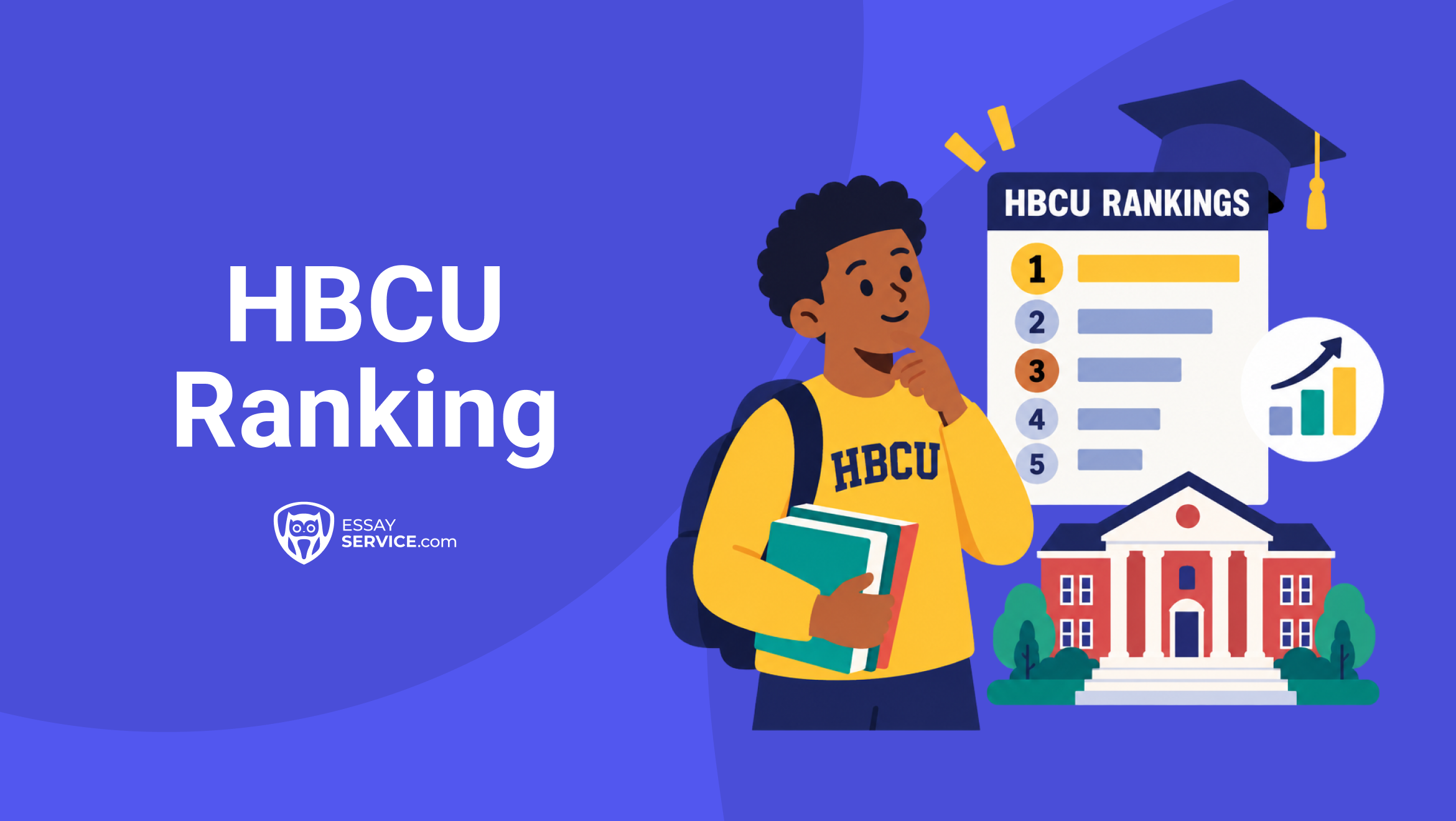
Historically Black Colleges and Universities are the schools founded before 1964 with the specific purpose of educating Black Americans, at a time when most of American higher education would not admit them. That explains why HBCUs still feel distinct now that they enroll students of every background. What the definition does not tell you is how much they vary among themselves. A 2,600-student women's liberal arts college and a 12,000-student public research university have almost nothing in common day to day; cost, selectivity, academics, campus life, and career outcomes all pull in different directions. These HBCU rankings sort through that.
Below is a working historically black colleges and universities list, ten schools deep, with the numbers and my honest read on each.


Best HBCUs: Ranking of Historically Black Colleges and Universities
We weighed four things when selecting the best HBCU colleges: how selective a school is, how many students actually finish, its academic reputation, and what graduates earn a few years out. None of those alone tells the whole story, which is why the order of the best HBCU in America below will not match every list you have seen.
1. Spelman College
- Strongest programs: Business is the giant here by graduate count, with psychology and political science behind it, but the sciences are the real draw if you are aiming at medical or graduate school.
- Academic reputation: U.S. News has named it the number 1 HBCU, and not just for one year; the liberal-arts rigor is why.
- Campus/student experience: A women's college within the Atlanta University Center, which means Morehouse cross-registration and a sisterhood alumnae still talk about decades later. One fair warning: students flag housing as the weak point, consistently.
- Notable advantages: A 78% graduation rate is high for any college, and median earnings run $57,376 five years out.
- Admissions/cost: 25% acceptance, test-optional, $31,556 tuition, February 1 deadline. Apply early if aid matters, because the sticker price is steep.
2. Howard University
- Strongest programs: Biology, political science, and psychology top the major list, though Howard's national name rests on its law, medicine, business, and communications programs.
- Academic reputation: People call it "The Mecca," and it is the closest thing the HBCU world has to a flagship research university, with an alumni network that reaches into politics, media, and law.
- Campus/student experience: Being in D.C. is the whole pitch. Federal-agency internships and newsrooms are within walking distance. Students love the energy and complain, often and loudly, about the administration.
- Notable advantages: The strongest earnings on this list, $64,373 five years out.
- Admissions/cost: 41% acceptance, test-optional, $35,810 tuition, February 1 deadline.
3. Florida A&M University
- Strongest programs: Health sciences, business, and criminal justice pull the biggest numbers, but the two names to know are the FAMU-FSU College of Engineering (run jointly with Florida State) and the School of Business and Industry.
- Academic reputation: Niche's number 1 HBCU, graded A-minus overall. This is a full public research university, and it feels like one.
- Campus/student experience: Big, loud, proud. The Marching "100" is one of the best college bands in the country, and SWAC football weekends are an event in themselves.
- Notable advantages: The most selective school here at 21%, paired with a very low in-state price. That combination is genuinely hard to beat elsewhere.
- Admissions/cost: 21% acceptance, $5,785 in-state ($17,725 out-of-state), February 1 deadline.
4. Morehouse College
- Strongest programs: Business, biology, and psychology lead, with engineering and film worth watching.
- Academic reputation: The only all-male HBCU in the country, and the college that produced Dr. Martin Luther King Jr. The alumni pull is a large part of why students choose it.
- Campus/student experience: Brotherhood is not a slogan at Morehouse; it is the organizing principle, and students talk about mentorship more than parties. It shares the Atlanta University Center with Spelman and Clark Atlanta.
- Notable advantages: Median earnings of $62,234 five years out, higher than several schools with better graduation numbers.
- Admissions/cost: 44% acceptance, test-optional, $32,893 tuition, February 1 deadline.
5. Xavier University of Louisiana
- Strongest programs: Biology, public health, and chemistry, nearly all of it pointed at pre-med and pharmacy. It is ranked nationally for both chemistry and public health.
- Academic reputation: The country's only Black and Catholic university, and the one I would name first for a student set on medical school; its record placing Black graduates into medical and health-professional programs is why its name travels.
- Campus/student experience: Small, demanding, and unmistakably New Orleans. Students describe the workload as heavy and the professors as invested, which is the tradeoff you sign up for.
- Notable advantages: No application fee, and every student receives some aid.
- Admissions/cost: 69% acceptance, test-optional, $28,733 tuition, March 1 deadline. Do not let that acceptance rate fool you about how hard the coursework runs.
6. Hampton University
- Strongest programs: Business, psychology, and biology by volume, with nursing, journalism, and the sciences holding the strongest reputations.
- Academic reputation: It brands itself "The Standard of Excellence," and the private research pedigree backs a good deal of that up.
- Campus/student experience: The waterfront campus is one of the most striking of any HBCU, and student life leans family-oriented with Division I athletics. The recurring gripe, for years now, is campus food.
- Notable advantages: Median earnings of $59,105 five years out, strong for a school this size.
- Admissions/cost: 62% acceptance, test-optional, $30,592 tuition, March 1 deadline.
7. North Carolina A&T State University
- Strongest programs: Engineering and computer science are the headline, and the university recently added artificial intelligence degrees. If a student wants an HBCU serious about STEM, this is the first stop.
- Academic reputation: The largest HBCU in the country and, by its own reporting, a top national producer of engineering degrees earned by African Americans.
- Campus/student experience: Aggie pride is not subtle, and the homecoming is one of the biggest anywhere. It is a genuine college-town experience.
- Notable advantages: Excellent value, plus the full-ride Cheatham-White Scholarship for the strongest applicants; in-state tuition is only $6,813.
- Admissions/cost: 50% acceptance, test-optional, $6,813 in-state ($21,543 out-of-state), February 1 deadline.
8. Tuskegee University
- Strongest programs: Nutrition, animal sciences, biology, and engineering, and it is home to a College of Veterinary Medicine, which very few institutions of any kind can claim.
- Academic reputation: Founded by Booker T. Washington. The engineering and agricultural programs have long track records to point to.
- Campus/student experience: Rural, tight-knit, and tradition-heavy, with strong Division II athletics. The location, a small Alabama town, is a real consideration rather than a detail to gloss over.
- Notable advantages: Median earnings of $60,741 five years out, plus a 95% employment rate a year after graduation.
- Admissions/cost: 49% acceptance, test-optional, $25,386 tuition, July 1 deadline (much later than most, useful to know).
9. Morgan State University
- Strongest programs: Business, information science, biology, and electrical engineering.
- Academic reputation: Maryland's designated public urban research university, with a research profile that has been climbing.
- Campus/student experience: A Baltimore campus with more than 100 organizations, active Greek life, and MEAC athletics. The city setting is both the draw and, per students, a safety question worth raising on a visit.
- Notable advantages: Median earnings of $59,150 five years out, which is strong given the far higher acceptance rate.
- Admissions/cost: 82% acceptance, test-optional, $8,229 in-state ($19,124 out-of-state), April 1 deadline.
10. Delaware State University
- Strongest programs: Biology, nursing, and business, plus an aviation program with its own flight training that genuinely sets it apart.
- Academic reputation: The only HBCU in Delaware, a 1890 land-grant school that reached R2 research status recently.
- Campus/student experience: Diverse and welcoming, with Divine Nine Greek life and Division I sports. Students are candid about administrative and housing headaches, which is worth weighing before you commit.
- Notable advantages: Median earnings of $52,996 five years out and solid in-state value.
- Admissions/cost: 47% acceptance, test-optional, $10,670 in-state ($20,634 out-of-state), February 1 deadline.
Best HBCUs by Major
Rank is a blunt instrument, which I say as someone who reaches for rankings constantly. Once a student has settled on a field, that school's standing in that one discipline should outweigh wherever it lands on a general list. These are the top HBCUs I steer people toward by area, reasoning attached.
Most Affordable HBCUs
Sticker price talks families out of HBCUs that would cost them next to nothing, and it happens far more than it should. This HBCU tuition cost comparison lines published tuition up against the average net price, meaning the amount households really pay after grants and scholarships come off. The distance between those two columns is usually the whole story.
The error I run into most is a family reading Xavier's $28,733 and stopping cold. They should not, because the average net price is $17,162 once aid is applied, with every enrolled student receiving some of it, so the true cost lands roughly eleven thousand dollars under the sticker. Net price, defined precisely, is the full cost of attendance minus the grants and scholarships you never repay, and it is the only tuition figure I trust when advising anyone. Public schools tell a cleaner version of the same thing. FAMU charges Florida residents $5,785 before aid even enters the conversation, which is what makes it the value pick on this list for an in-state student. One caution, though. An average net price is an average, so your own number bends to your family's finances; run each school's net price calculator before you rule anything in or out.
HBCUs With the Highest Acceptance Rates
Plenty of HBCUs admit most of the students who apply. For anyone searching HBCUs with high acceptance rates, or hunting the easiest HBCU to get into after a rough semester or two, the table gathers schools that take roughly two-thirds of applicants or more.
A generous acceptance rate is not a standing offer, and pretending otherwise sets students up badly. These schools still expect a complete application: a transcript, a minimum GPA, and, at some, test scores you can choose to send. Deadlines end up counting for more than the percentage does. Several admit on a rolling or priority basis, which means an early application lifts both your odds and your aid, no matter how high the admit rate climbs. There is also a program-level catch that trips people up every single year. That 93% at Jackson State describes the university as a whole; competitive majors, such as nursing, being the usual example, screen their applicants on a separate track and admit far fewer. Read a high acceptance rate as evidence you have a real shot, then do the work the application still asks of you, because the number was never a promise.
How to Choose the Best HBCU for You?
No ranking, mine included, knows your budget, your intended major, or how you actually want to live for the next four years. The highest-ranked HBCU is not automatically your best fit; the right one is the school whose specifics line up with yours. Run this before you commit.
- Available majors: confirm your intended major exists in real depth, with faculty and recent graduates behind it, not just a line in the catalog.
- Accreditation: verify institutional accreditation plus program-specific accreditation for fields like nursing, engineering, and business, since it affects licensure and credit transfers.
- Tuition and financial aid: compare net price rather than sticker, and run each school's own calculator.
- Location: be honest about whether a large city, a small town, or proximity to home suits you.
- Campus size: a 2,600-student college and a 12,000-student university feel nothing alike day to day.
- Graduation rate: read it as a signal of how well a school supports students through to a degree.
- Internships and career outcomes: ask about recruiting pipelines, co-ops, and where last year's graduates actually landed.
- Student organizations and campus culture: if you can visit, do it, because clubs, Greek life, and the band define daily life far more than a rank does.
And finally, if you need help balancing the amount of work right before you move on to the university, our college essay writing service can step in while you take care of your final high school assignments.
Final Thoughts
If one idea should survive this guide, it is that "best" bends to the person asking. Spelman tops my list, but the ten schools here run the full spread, and the ranking cannot tell you which suits you. Your major, your net price, and your campus decide that. Choose accordingly.
Frequently Asked Questions
What Is the #1 Ranked HBCU?
What Is the Top 10 HBCU?
What Are the 10 Hardest HBCUs to Get Into?

Phil spends his working days teaching international trade. He contributes to our blog as a freelancer, leveraging his experience with MBA students to advise on academic writing, studying abroad, and securing funds.
.webp)

New posts to your inbox
Your submission has been received!