
Key Takeaways
- A conceptual framework clarifies how research ideas connect.
- Clear examples of conceptual frameworks show variables and relationships.
- Strong frameworks guide research questions, methods, and analysis.
- Accounting for mediating, moderating, control, and confounding variables improves accuracy.
A conceptual framework illustrates a researcher-created visual or written model that shows how key concepts and variables connect within a research study. It lays out expected cause and effect relationships, commonly illustrating how independent variables influence dependent variables.
This article reviews clear definitions, examples of conceptual framework models, essential elements, and practical steps for developing a framework that fits qualitative or quantitative research designs.
What Is a Conceptual Framework?
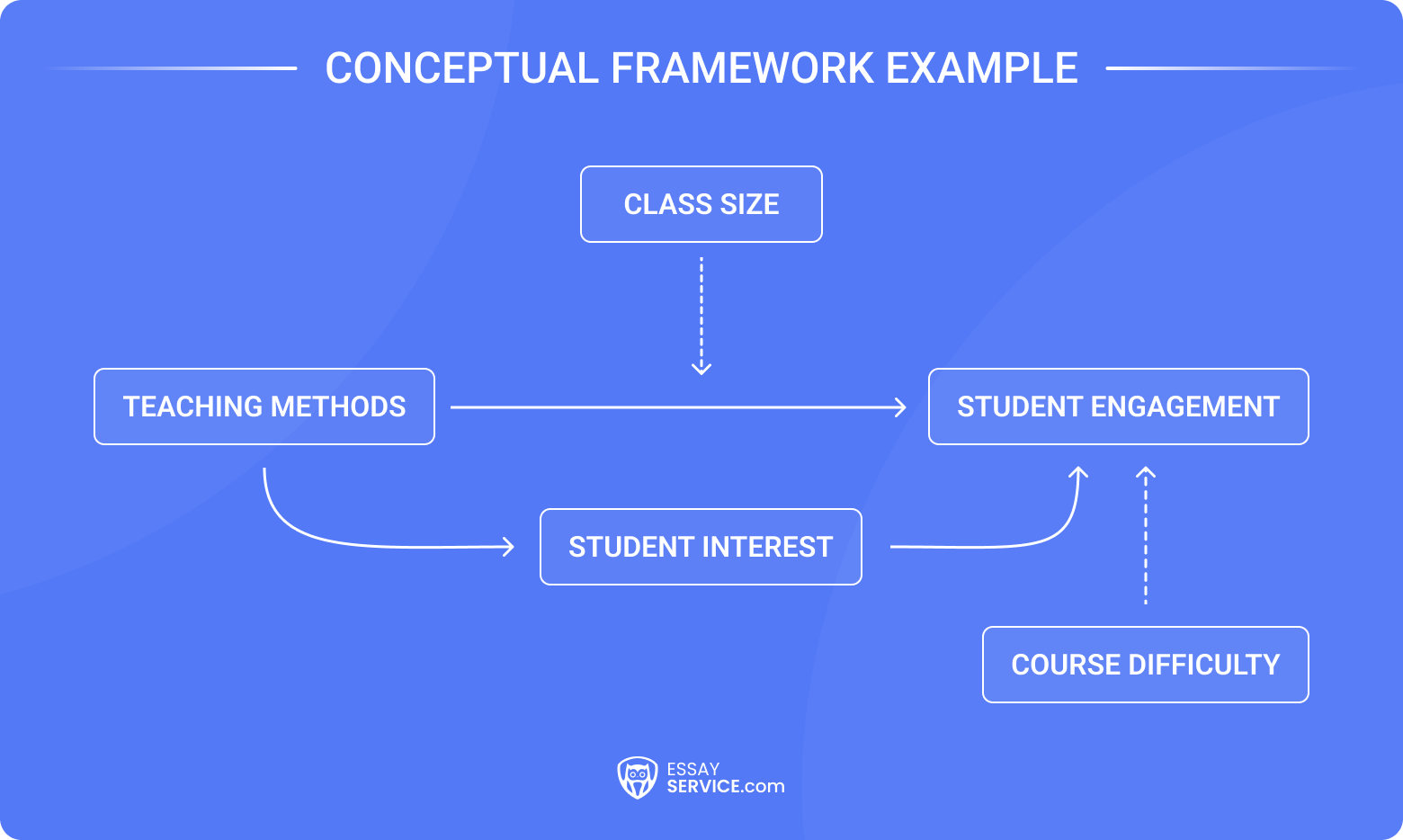
A conceptual framework is a structured explanation of how key concepts and variables relate within a research study. It defines the expected relationships between independent and dependent variables and shows how theory informs the research question and design.
Tip: Start by identifying only the most relevant variables from your literature review. Adding too many weakens clarity and makes analysis harder.
Purpose of a Conceptual Framework
The purpose and importance of a conceptual framework extend across research fields. A conceptual framework includes several essential functions:
- It clarifies the context and boundaries of the research problem.
- It explains why the study matters and how it fits existing research.
- It helps researchers test and refine their understanding of the problem.
- It shows the expected relationships between variables.
- It guides objective setting, method selection, and data analysis decisions.


Building a Conceptual Framework?
EssayService experts help structure research ideas and data analysis clearly.
3 Conceptual Framework Examples
Below, you’ll find three clear conceptual framework diagram examples that show how research ideas turn into structured models. Each example explains the variables involved, how they influence one another, and how context shapes real research outcomes across different settings.
For a clearer writing style, avoid overused expressions and consult a list of cliche examples.
Example 1: Study Environment and Academic Focus Framework
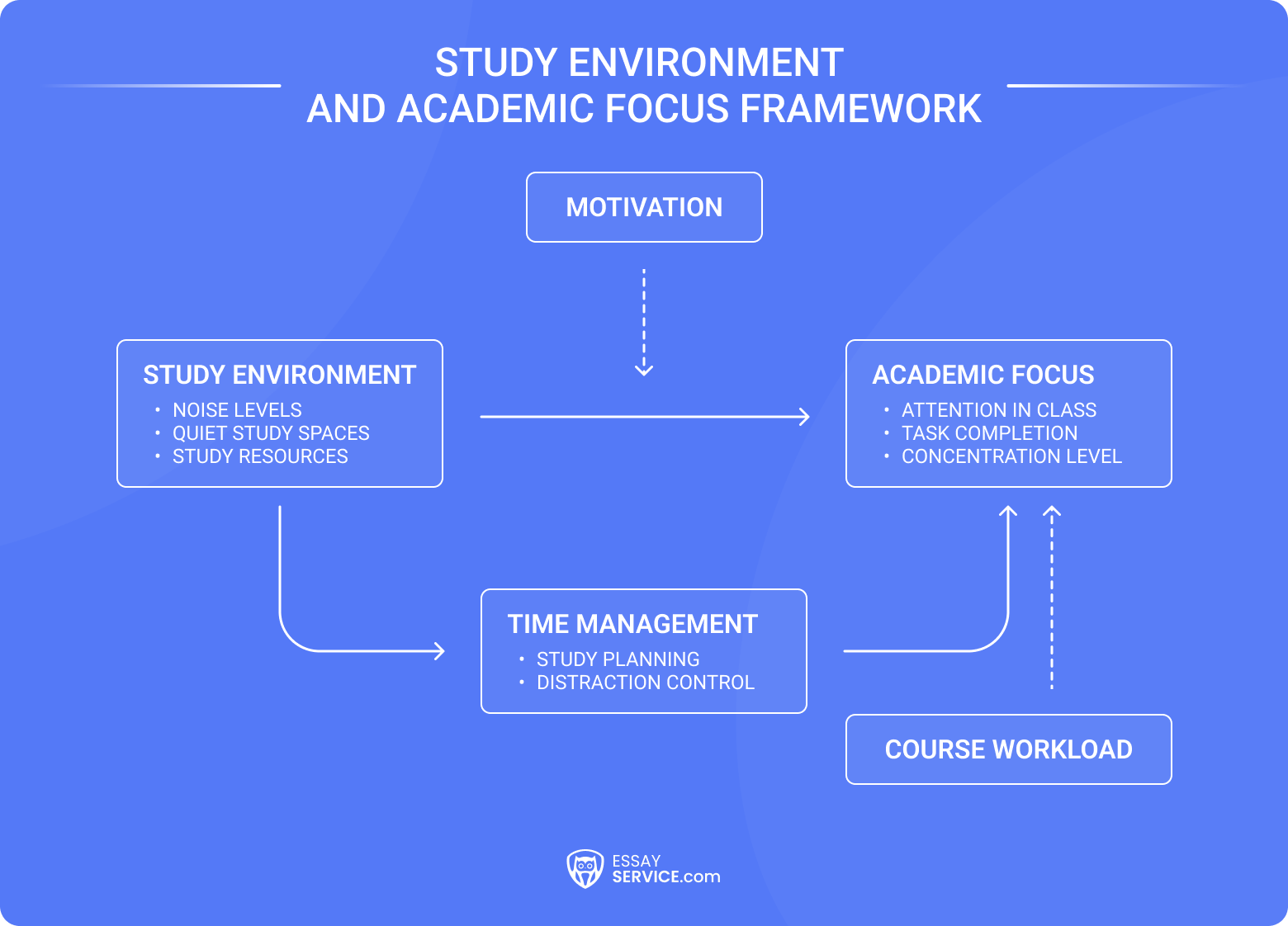
Imagine a study looking at how a student’s study environment affects their ability to stay focused. The goal is to see whether learning conditions actually shape how well students concentrate during academic tasks.
In this example of conceptual framework in qualitative research, the study environment is treated as the independent variable. It covers noise levels, access to quiet spaces, and available study resources. Academic focus is the dependent variable and reflects attention in class, task completion, and perceived concentration.
Time management helps explain this connection. A supportive environment can make it easier to plan study time and avoid distractions. Motivation plays a moderating role, influencing how strongly the study environment affects focus. Other factors, such as course workload, are considered during analysis to keep the results balanced.
Example 2: How Workplace Flexibility Shapes Job Satisfaction
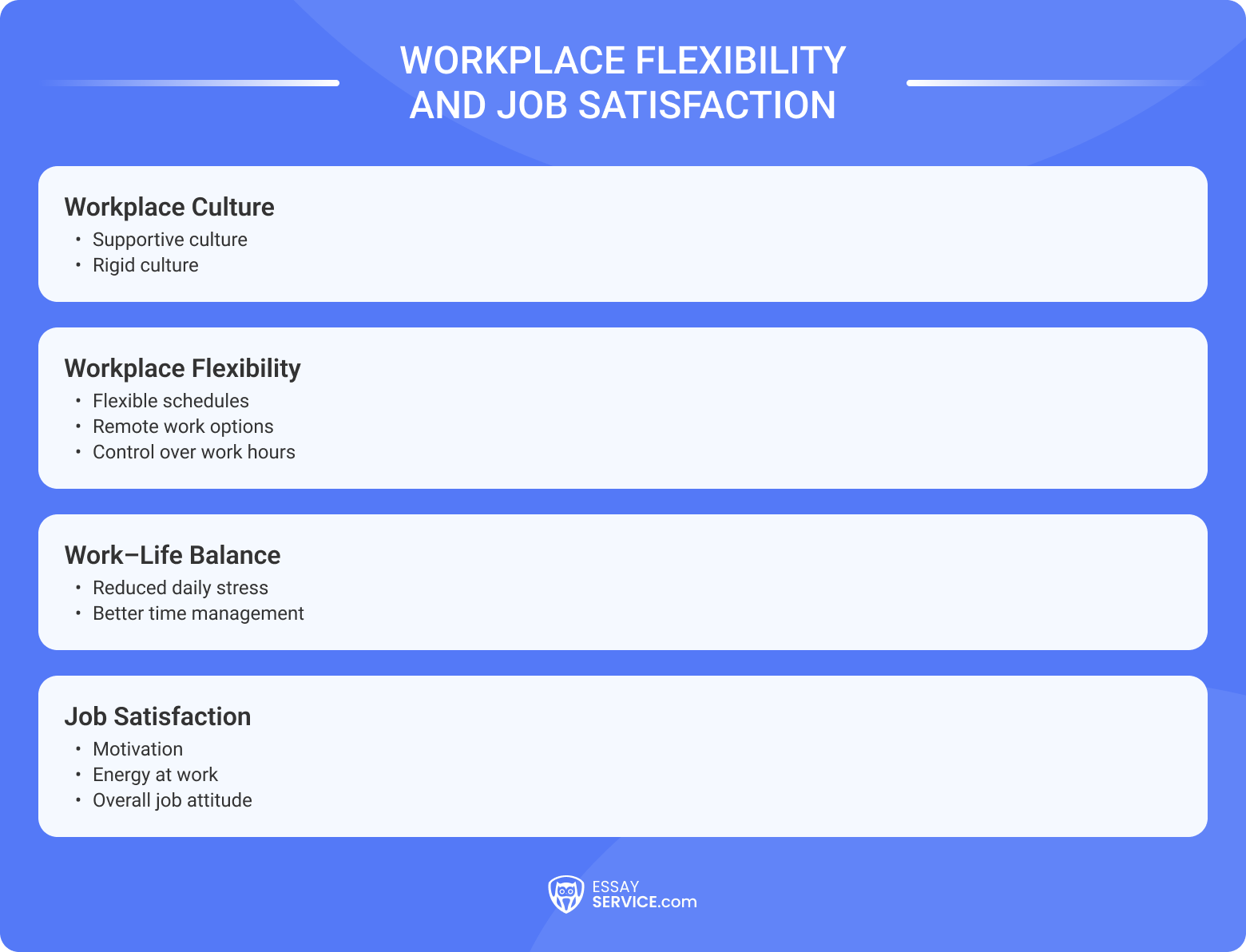
This conceptual framework example explores a simple idea. When people have more control over how they work, they often feel better about their jobs. Flexible schedules and remote options can change how employees experience their day, not just how many hours they work.
Workplace flexibility is the starting point. It covers things like choosing work hours or working outside the office. Job satisfaction sits on the other end and shows up as motivation, energy, and a general attitude toward work. Work-life balance sits in the middle, shaping how flexibility turns into satisfaction by easing daily pressure.
The effect is not the same everywhere. In supportive workplace cultures, flexibility matters more. In rigid settings, its impact fades. Other job demands are kept in view so the relationship stays realistic.
Example 3: Teaching Methods and Student Engagement Framework
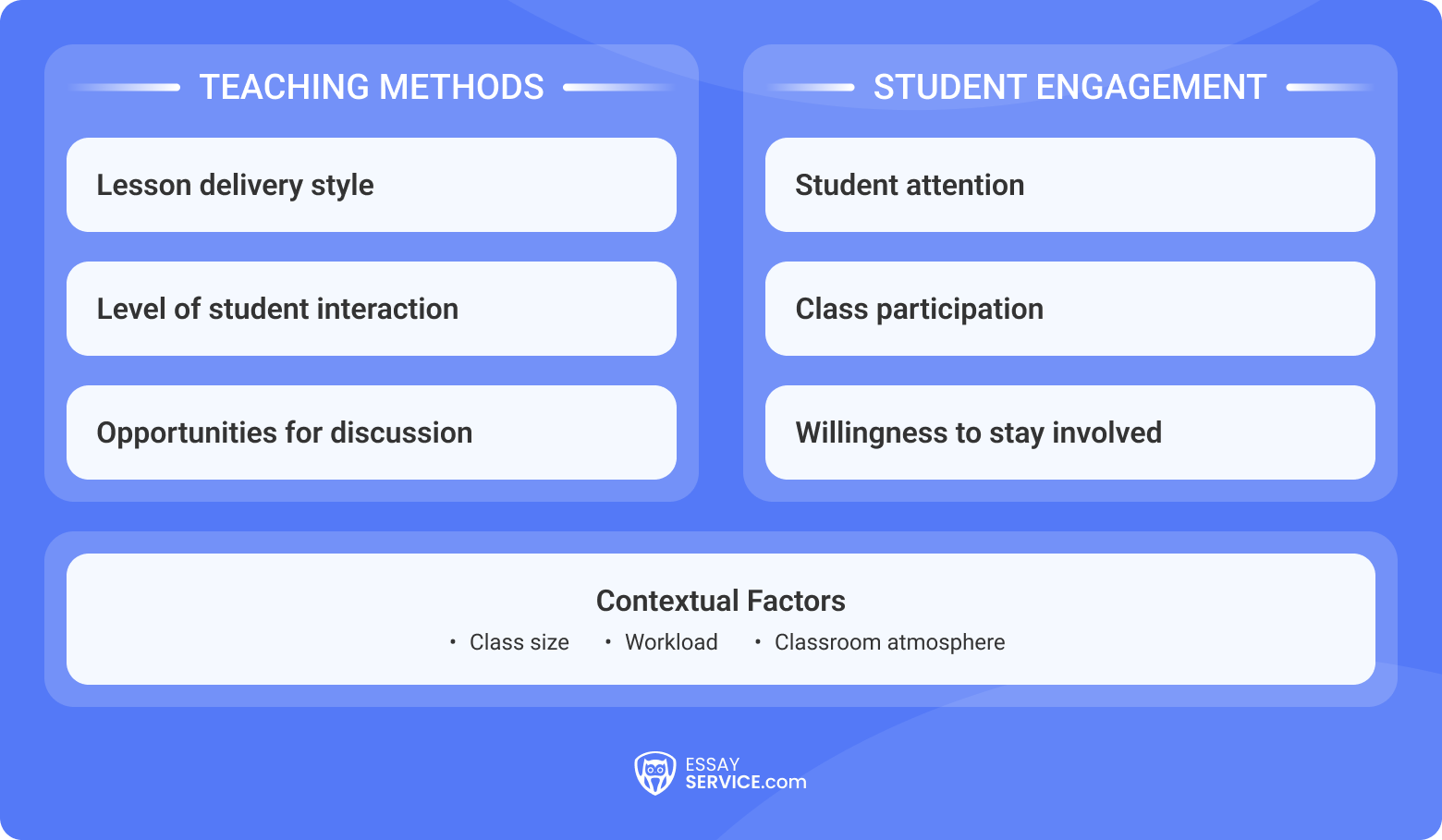
As part of our conceptual framework examples in research, this one starts with a familiar classroom question: why do some lessons pull students in while others lose them halfway through? The framework focuses on how teaching choices shape the way students show up mentally during class.
Teaching methods sit at the center of the model. That includes how lessons are delivered, how often students interact, and how much room there is for discussion. Student engagement reflects what follows, including attention, participation, and willingness to stay involved. Interest bridges the gap, since students engage more when the lesson feels relevant or stimulating.
Class size, workload, and classroom atmosphere can strengthen or weaken this connection. These factors stay visible during analysis, so the relationship reflects real teaching conditions.
Core Elements of a Conceptual Framework
Core elements of a framework help structure a study and clarify its logic:
- Concepts or variables define the main ideas being examined, with each concept treated as a distinct entity.
- Relationships show how these variables connect, often through arrows indicating influence or association.
- Context sets the boundaries of the study, explaining where, when, and for whom the research applies.
Clear frameworks also support planning, writing, and revision, which is why students sometimes seek college essay service support.
Make Your Research Clear and Logical
EssayService professionals help turn complex ideas into structured frameworks.
How to Build a Conceptual Framework with Examples
Before developing a conceptual framework, it helps to see the process as a sequence of small, intentional decisions rather than a single diagramming task.
Below, you’ll learn how to:
- Start with a focused research question
- Identify independent and dependent variables
- Map clear cause-and-effect relationships
- Account for additional influencing variables that shape results
Step 1: Start With a Clear Research Question
The process of constructing a conceptual framework grows out of the research question. It helps to begin with a topic you already care about, then look through existing studies to see what has been covered and where the gaps are. From there, narrow your focus until the question points to a specific issue you want to examine. Be clear about your goal and keep the question realistic and answerable. Ask whether it adds something useful or new, and adjust it after getting feedback.
Example research question: How does the study environment affect academic focus among university students?
Pro tip: A strong research question feels precise, not crowded. If it tries to do too much at once, simplify it.
Step 2: Select Your Independent and Dependent Variables
Once you have a clear research question, the next step is figuring out what drives the change and what responds to it. Independent variables represent the factors you think have an influence, while dependent variables capture the results you want to understand. One initiates change. The other reflects the outcome.
For example, if your study looks at how the study environment affects focus, the study environment is the independent variable. Academic focus is the dependent variable. This step matters because it shapes your entire framework. In any example of conceptual framework, clear variables make the relationships easier to understand and analyze.
Step 3: Map Cause-and-Effect Relationships
At this stage, it is helpful to examine how your variables interact. Which factors come first, and which ones respond? These links are usually shown with simple arrows that move from cause to effect. Laying this out visually makes it easier to spot patterns and question weak or unclear links.
Pro tip: If you cannot explain each arrow in one sentence, the relationship is probably unclear.
Step 4: Account for Additional Influencing Variables
Besides independent and dependent variables, researchers should also consider:
- Moderating variables
- Mediating variables
- Control variables
- Confounding variables
Moderating Variable
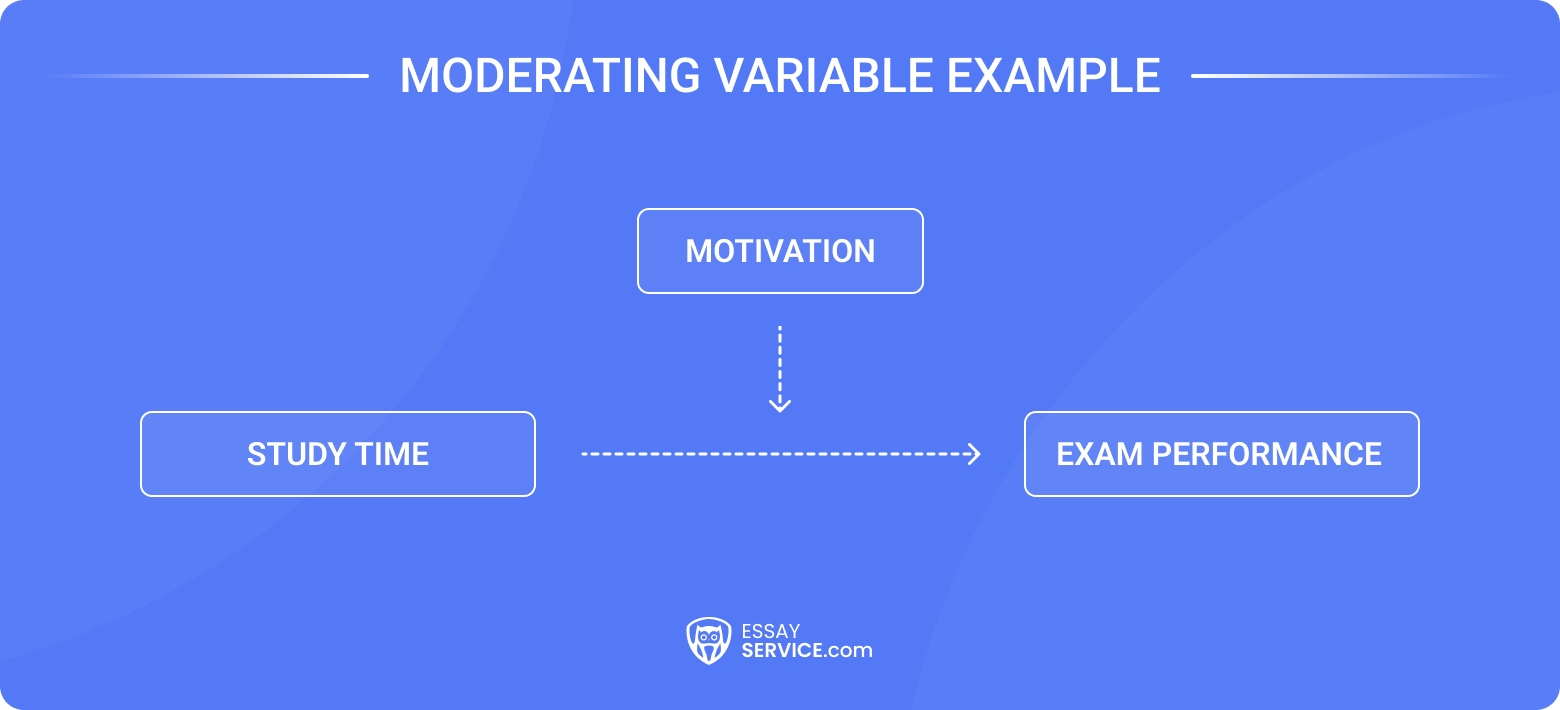
A moderating variable changes how a relationship plays out rather than explaining why it exists. It affects the strength or direction of the link between an independent variable and a dependent variable, depending on the situation or group involved.
Take a study on study time and exam results. Studying more usually helps, but the effect is not equal for everyone. Motivation can shift the outcome. Highly motivated students often benefit much more from extra study time, while less motivated students may see smaller gains. Motivation does not replace study time. It shapes how powerful its effect is. Accounting for moderating variables helps explain uneven results and strengthens the realism of findings.
Mediating Variable
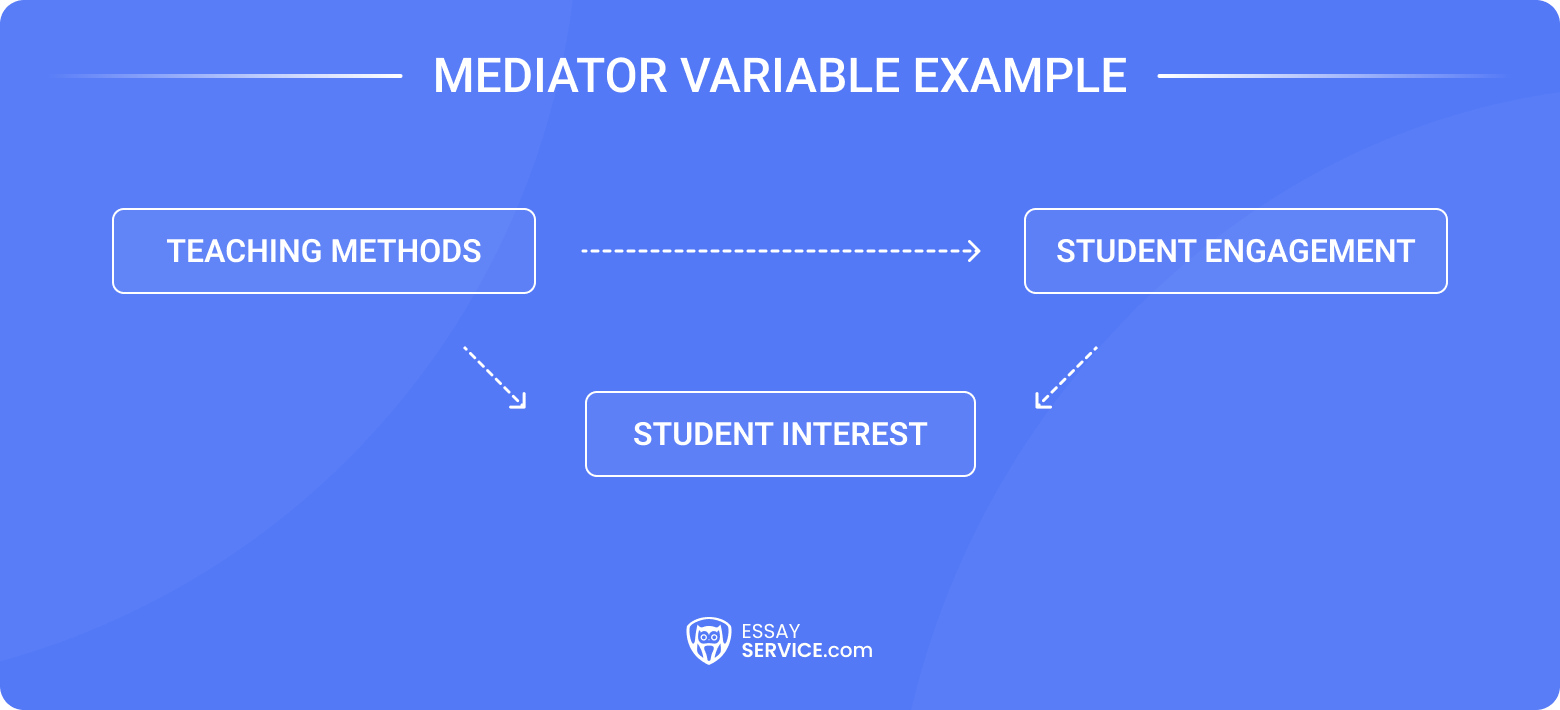
A mediating variable shows what happens between a cause and its outcome. Instead of just saying that one thing affects another, it helps explain how that change actually takes place. It fills in the missing steps that connect the independent variable to the dependent variable.
Think about a study looking at teaching methods and student engagement. A new teaching approach does not magically make students participate more. What often changes first is interest. When lessons feel more engaging, students become interested, and that interest leads them to take part. Interest acts as the bridge between teaching methods and engagement. Including a mediating variable makes the framework feel more honest and closer to how change happens in real life.
Control Variable
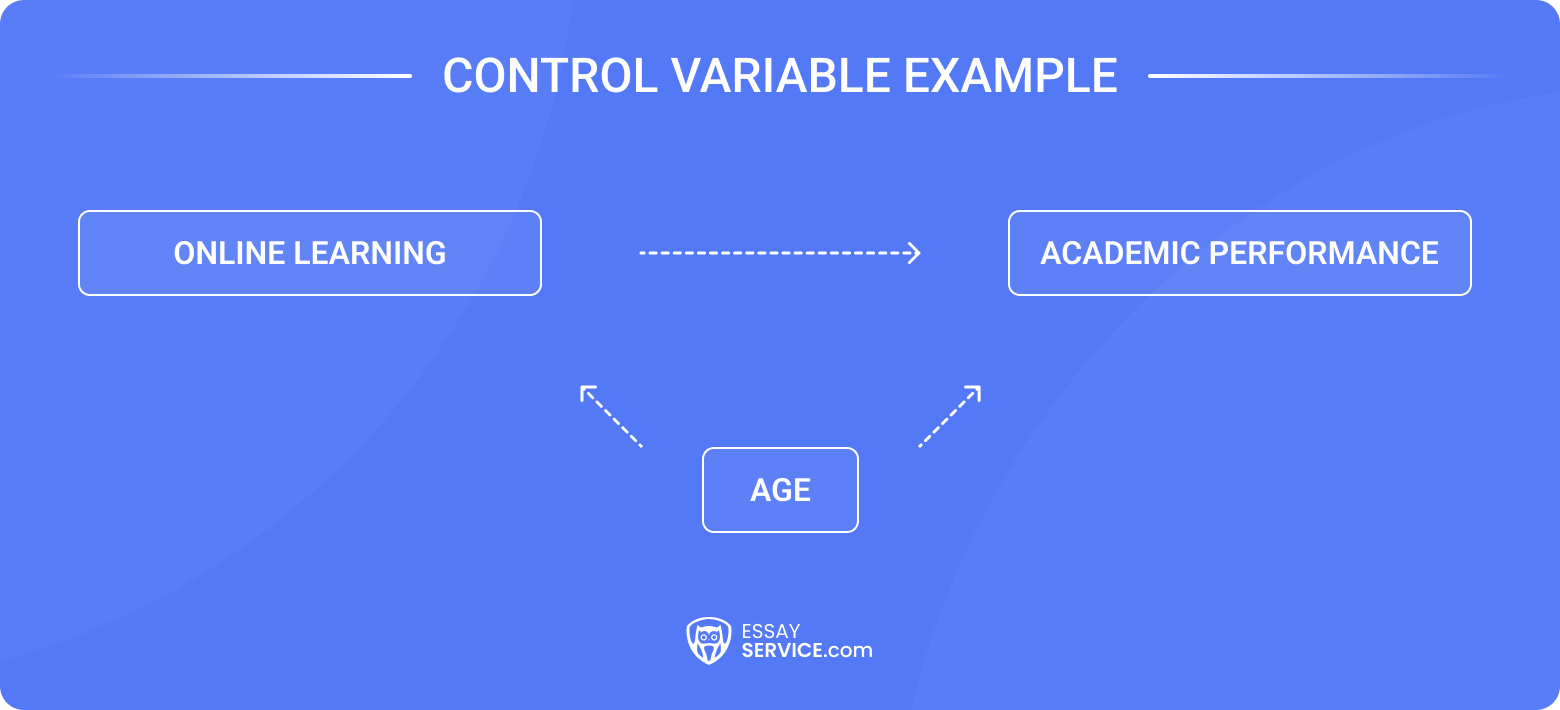
A control variable is a factor you deliberately keep constant so it does not interfere with the relationship you are studying. You are not studying it, but you know it could quietly shape the outcome if left unchecked. Think of it as background noise you turn down so you can hear the main signal clearly.
For instance, consider research on how online learning affects academic performance. Age can influence how easily students adapt to digital platforms. If younger and older students are mixed without adjustment, age might shape the results more than online learning itself. By accounting for age, the researcher limits its influence and keeps attention on the main variables. Control variables help reduce distraction in the data and make conclusions more trustworthy.
Confounding Variable
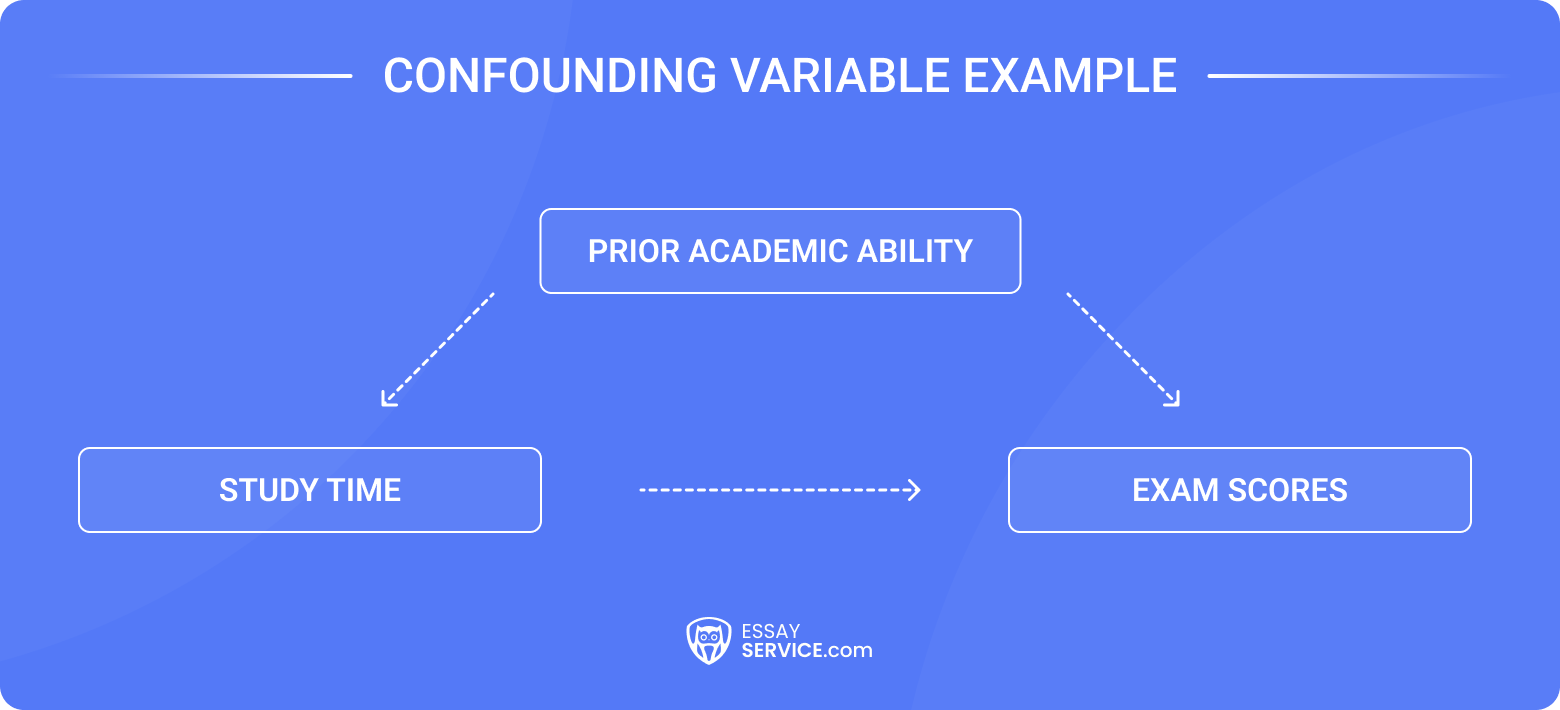
A confounding variable is an outside factor that is connected to both the independent variable and the dependent variable. It is not always measured, which is what makes it risky. If you miss it, the results can point to the wrong cause.
Picture a study showing that students who study longer hours get higher exam scores. At first glance, study time looks like the reason. But prior academic ability might be doing the real work. Strong students often study more and perform better anyway. If that factor is ignored, the link between study time and performance appears stronger than it truly is. Spotting confounding variables helps keep conclusions honest and grounded.
Final Words
A strong conceptual framework brings clarity to a research study by showing how ideas, variables, and relationships fit together. The examples of conceptual frameworks discussed here show how thoughtful structure leads to more focused analysis, stronger interpretation, and research that actually explains what is happening rather than just describing it.
For additional writing guidance, review a 500 words essay example to reinforce structure and coherence in academic work.
Frequently Asked Questions
What Is an Example of a Conceptual Framework?
Where I Can Find Conceptual Framework Examples?
What Is a Conceptual Framework and How to Make It With Examples?
Can I Use an Existing Conceptual Framework Example as a Reference?

John spends his days studying the impact of language. He uses his deep understanding of linguistics and research experience to help students communicate more effectively and craft immaculate research-intensive papers.
- National University. (n.d.). Conceptual framework. https://resources.nu.edu/researchtools/conceptualframework
- University of South Australia. (n.d.). Research paradigms and conceptual frameworks [PDF]. https://lo.unisa.edu.au/pluginfile.php/1205749/mod_book/chapter/122322/Research%20paradigms%20and%20conceptual%20frameworks.pdf
- ResearchGate. (n.d.). How to build a conceptual framework in qualitative research. https://www.researchgate.net/post/How_to_build_a_conceptual_framework_in_qualitative_research



New posts to your inbox
Your submission has been received!