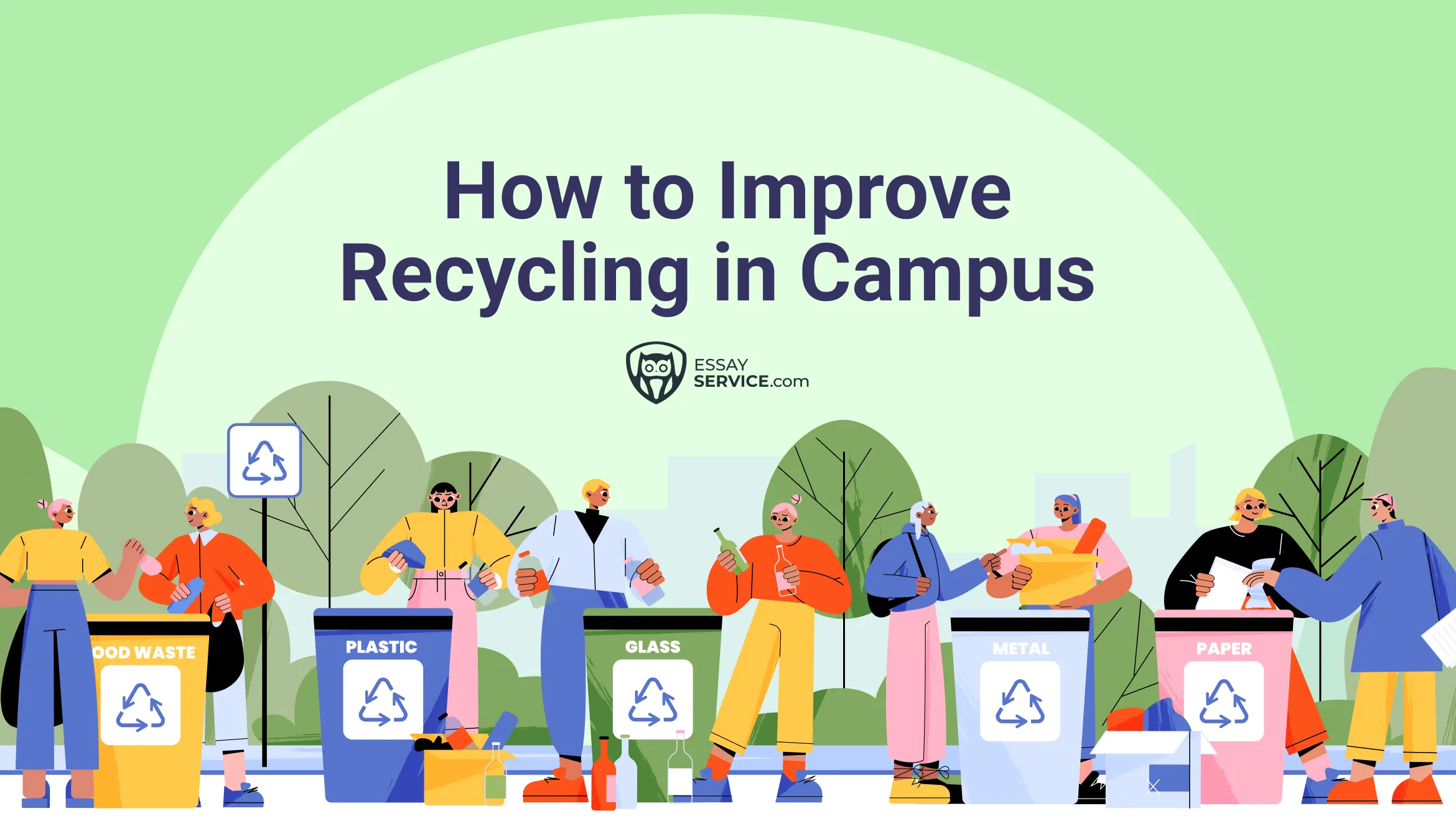

In the age of rapid ecological decline caused by human activities, it’s more important than ever to spread awareness about ecology and encourage sustainable behaviors. And it’s particularly important for younger generations to connect with nature.
Studies show that developing respect for nature in students is linked to improved public and environmental health, as well as increased health and sustainable behaviors in students themselves. And it all begins in college. Due to large student populations, colleges produce plenty of waste, which is a good starting point to foster a recycling culture in younger generations.
In this article, we’ll discuss simple solutions that can help improve recycling on campus and stimulate a positive impact.


College Students Recycling Statistics
Let’s take a look at the main recycling statistics:
- An average college student produces about 640 pounds (290 kg) of solid waste per year. Even for mid-sized schools, this means tons of waste every year.
- The biggest waste categories are paper and cardboard (26.6%) and organic and food waste (32.4%). Other big categories include glass, plastic, yard and wood waste, and metal. And then there is also hazardous waste (such as chemicals from labs) and waste from electrical and electronic equipment.
- Despite the existing problem, only about 63% of colleges and universities currently have established recycling programs.
Needless to say, an enormous amount of waste annually produced by schools has a massive impact on the environment, causing pollution, contaminating ecosystems, and contributing to climate change. The good news is that 80% of campus waste can be recycled. This can greatly reduce the environmental damage. Besides, campuses are the perfect place for starting an eco-change, as such initiatives can help foster a culture of sustainability among younger generations.
What Can and Cannot Be Recycled
Recycling rubbish is one of the easiest ways to reduce the amount of annual waste on campuses and hence protect the environment. Despite a common belief, it doesn’t require significant effort. In fact, a strong recycling culture consists of small and simple everyday actions. However, it’s important to understand what can and cannot be recycled before implementing practical steps.
What Can Be Recycled?
Let’s start by looking at the main types of materials typically accepted by recycling programs:
1. Paper-Based Materials & Packaging
Types of waste:
- Office paper
- Paper bags and packaging
- Magazines
- Newspapers
- Cardboard and boxes
Important: Paper waste should be kept clean and dry. Cardboard boxes should be flattened for space economy.
2. Plastic-Based Materials & Packaging
Types of waste:
- Plastic bottles
- Food containers
- Milk jugs
- Detergent bottles
- Yogurt cups
- Bottle caps
Important: Plastic containers should be rinsed. They must be labeled with recycling symbols #1 (PET) and #2 (HDPE).
3. Glass Waste
Types of waste:
- Glass jars
- Glass bottles
Important: Glass should be kept clean and unbroken. Most programs accept glass of clear, green, and brown colors.
4. Metal Waste
Types of waste:
- Steel and tin cans
- Aluminium cans
- Aluminium trays
- Foil
Important: Any food leftovers should be rinsed. Cans should be crushed.
5. Electrical Waste
Types of waste:
- Old electronic equipment (e.g., cell phones, computers, monitors, etc.).
Important: Electrical waste is accepted by specialized e-waste recycling programs.
6. Batteries
Types of waste:
- Lithium-ion batteries
- Car batteries
- Rechargeable batteries
Important: All batteries should be taken to specialized battery drop-off points.
What Cannot Be Recycled?
Now that you know which types of waste can be recycled, let’s consider the types that cannot:
- Plastic Bags and Wraps
Thin plastic bags and wraps often damage recycling machinery by tangling in its mechanisms.
Solution: Take this type of waste to grocery stores that have special recycling programs.
- Waste With Food Contaminations
Waste like used paper dishes, pizza boxes, and food-soiled aluminum foil can’t be recycled because they contaminate other recyclables.
- Broken Glass
Broken glass is hard to sort and creates safety risks, which is why it’s non-recyclable.
- Styrofoam
Styrofoam has low recyclability with higher costs, which is why many programs don’t accept it for recycling.
- Hazardous Waste
Medical/lab waste, peroxide containers, paint cans, and other types of hazardous waste require specialized disposal approaches for safety reasons.
- Non-Recyclable Plastic Types
Plastic products that have #3, #4, #6, and #7 labels, as well as straws and plastic utensils, are not accepted by recycling programs.
Top 10 Tips for Campus Recycling Success
Now that you have an idea of what can and cannot be recycled, let’s explore how to improve recycling in campus. Here are 10 simple tips for success.
- Perform a Thorough Waste Audit
Analyze the amount of waste produced by your campus. This will help you determine your benchmark and plan your recycling efforts effectively, according to your specific needs.
- Place Recycling Containers Strategically
A waste audit will help you determine the number and capacity of recycling containers that you need. The next step is to place these containers strategically and consistently across the areas where students will see and use them.
There are 4 main areas to place containers:
- Common areas (e.g., classrooms, hallways, green spaces, etc.)
- Athletics facilities
- Cafeteria
- Dorms
Use consistent container colors and graphics to avoid confusion and increase success rates.
- Use Images of Waste, Not Just Text
A study by the University of Toronto revealed that adding proper recycling graphics to containers increases diversion rate by 163% and reduces the time needed to make decisions at the bin by 33%.
- Launch Your Program and Engage Students
Once everything is planned out and prepared, launch your program and market it to students to generate excitement. For example, hold individual and class-based recycling-related competitions and offer prizes to the most active participants. Also, consider creating promo videos and a hashtag for your program to share the details on social media. These efforts should help you engage students and encourage participation.
- Create a Dedicated Student Team
Student-run teams work great for creating and spreading messages that resonate with other students. A dedicated green team will help you spread the word about your program, educate students on ecology and sustainability, and host engaging recycling activities for high school students and college students that drive involvement.
- Create a Sense of Competition
Healthy competition creates excitement and boosts student involvement. To stimulate it, you can research national and regional contests related to recycling and join in. There are plenty of recycling projects for school students and college students alike, so the options are limitless. You can also hold your own competitions with prizes. Such competitive activities will help students get more engaged in your green initiatives.
- Get Your Custodial Team Involved
Custodial teams know about all the trash-related challenges and problems firsthand. Therefore, they can inform the design of your program and help you increase the chances of success. For example, Black & McDonald have achieved zero waste through their recycling program thanks to letting their custodial staff provide feedback and suggestions.
- Make Your Sports Events Greener
Sports games tend to produce double the waste due to the large number of attendees. To address this problem, communicate with your vendors to ensure that food and drinks for sports events are provided in recyclable or compostable packaging.
- Share the Outcomes
Don’t let your recycling program run quietly. Instead, post regular updates about the results to show students what they’ve achieved. Being informed about the change they’re making should boost students’ motivation and help you accomplish even greater results. But make sure that the results you share are easy to understand.
- Focus on Continuous Improvement
When your program is up and running, don’t stop there. Continuously track and analyze your accomplishments to detect gaps and areas for improvement. Apart from looking at raw numbers, regularly collect feedback and suggestions from your custodial team, faculty, and students themselves. And remember to keep everyone updated on any changes and new initiatives that you implement.
Recycling Activities for Students
Now you have a step-by-step plan on how to develop and implement an effective recycling program on your campus. If you’re looking for more ideas on how to eliminate unnecessary waste, here are a few examples of activities and initiatives for students that can help:
- Turning personal mugs into a trend. Get rid of plastic cups at water dispensers and encourage faculty and students to bring in their favorite mugs to school. You can also create reusable, branded bottles and mugs that everyone can buy on campus.
- Running a fun “reuse” campaign. Encourage students to recycle their study materials by reusing each other’s notes, using paper waste during classes, making creative projects using waste, etc.
- Organizing specialized workshops and campaigns for electronic waste.
- Going paper-free by encouraging the use of e-books instead of print books.
- Creating waste segregation stations for waste that can and cannot be recycled.
These are just a few of the many options. You can come up with many other activities and ideas to stimulate progress.
The Bottom Line
Recycling isn’t a new concept. Yet, many colleges and universities still don’t have an established program for it despite the enormous amount of waste produced on their campuses. This happens mostly due to a common misconception that campus recycling is something complex and challenging. Luckily, now you know that it’s not.
After reading this article, you should have a better idea of how to plan and implement a recycling program that actually brings results. Start applying the tips and ideas shared here to minimize waste and make a positive change.
- Jessica R. Duke, Emily A. Holt. "Connection to nature: A student perspective." Ecosphere, 15, Oct. 2023. https://esajournals.onlinelibrary.wiley.com/doi/10.1002/ecs2.4677
- "The Unique Waste Management Challenges of North American Universities." Sensoneo, 3, Dec. 2025. https://www.sensoneo.com/waste-library/waste-management-challenges-universities/
- María-Jesús Rodríguez-Guerreiro, Verónica Torrijos, Manuel Soto. "A Review of Waste Management in Higher Education Institutions: The Road to Zero Waste and Sustainability." Environments, 18, Dec. 2024. https://www.mdpi.com/2076-3298/11/12/293
- "New Report Examines US University Sustainability and Recovery Activities." RRS. https://www.recycle.com/latest/report-examines-university-sustainability-activities
- "Effect of Recycling Graphics on Waste Diversion." CleanRiver. https://go.cleanriver.com/effect-of-recycling-graphics-on-waste-diversion
- "Black & McDonald." CleanRiver. https://cleanriver.com/case-study/black-mcdonald/