
Few decisions have as tremendous an impact on a child’s future as your choice of school. Choose well, and your child will get the head start they need to succeed in academia and life in general. Choose poorly, and their potential may end up overlooked or even squandered.
So, how do you make the right choice? Well, you’ve already made the first step. You’ve opened this guide. Keep reading to discover your options, how they compare, and how to select the right one.
First Things First: What Are the Different Types of School?
Broadly speaking, as a parent, you have two main options when choosing a school. Your child can attend a school funded either by the government (public/state) or through tuition fees (private/independent).
What Are Public Schools? 7 Types to Know
Public schools, also more commonly known as state schools, exist to provide free education to all children from ages 5 to 16. There are seven different types of public schools. Let’s explore them.
Grammar Schools
Grammar schools are publicly funded secondary schools with a selective admissions process. Children can attend them from age 11, but they must pass an exam called the “11-plus” first.
Grammar schools were more common in the early 20th century. In the 1960s, however, the government pushed for universal education for every child. So, their number went down.
Community Schools
Community schools are your typical state-funded schools that follow the national curriculum. They’re financed and overseen by local authorities and are by far the most common type of public school out there.
Children can attend them for free, without any selection during the admission process. That said, community schools prioritize applicants from their catchment areas.
Foundation and Voluntary Schools
Local authorities also finance foundation and voluntary schools, which remain free to attend. However, their governing bodies, usually foundations or trusts, have more control over running the school or selecting teaching methods.
Some, but not all, foundation and voluntary schools are supported by religious organizations.
Special Schools
Children with special education needs and disabilities (SEND) can attend a special school that caters to their needs. Funded by the state, these schools welcome pupils from age 11.
Special schools may concentrate on catering to children with a specific category of needs (e.g., cognition, sensory and physical needs) or specific conditions (e.g., Autism spectrum disorders).
Middle Schools
Some parts of the UK retained a three-tier system, under which children go from the first school to the middle school and then to the high or upper school.
Middle schools are open to all children, although age eligibility varies. Some middle schools teach children ages 8 to 11, others welcome children ages 9 to 11, 9 to 12, or even 10 to 13.
Free Schools
Free schools are set up and managed by charities, universities, businesses, faith groups, and other groups. They have more control over the curriculum (they don’t have to follow the national one), as well as the length of school terms and school days.
You can choose from two types of free schools: university technical colleges and studio schools.
Academies
Academies also have more leeway regarding curriculum and school days. They’re funded by the state and inspected by Ofsted, with admissions and exclusions following the same rules as in other state-funded schools.
An academy trust is at the helm of any given academy. It’s a not-for-profit company that can run one or several academies at a time.
Now, What Are Private Schools?
Private (independent) schools get their funding from tuition fees, not the government. They’re free to set their own curriculum and choose admission criteria if they wish to.
That said, not all private schools are selective. Moreover, all private schools get inspected either by Ofsted or an approved inspectorate.
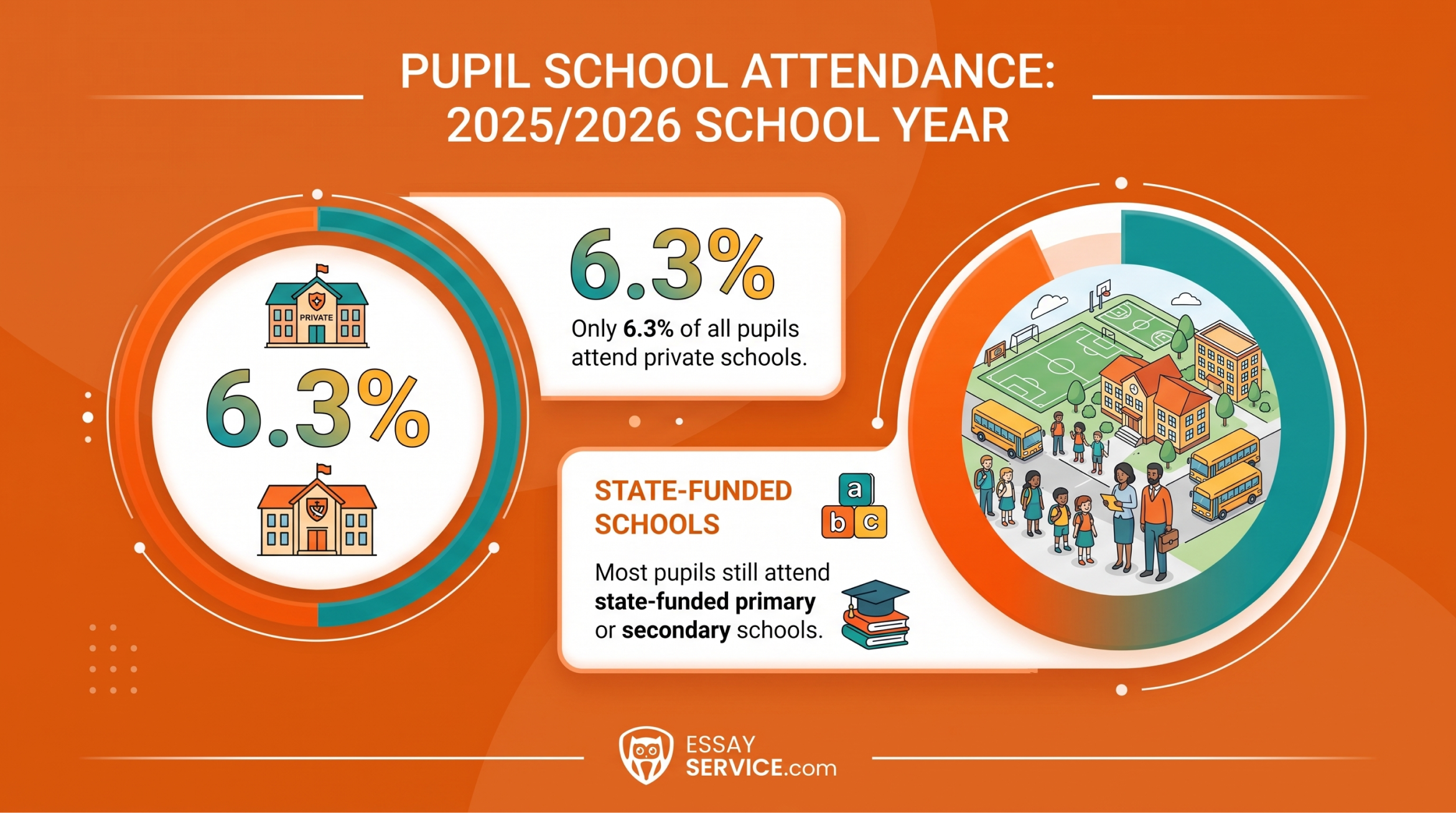
As of the 2025/2026 school year, only 6.3% of all pupils attend private schools. Most still go to state-funded primary or secondary schools.
What Are the Benefits of Private Schools?
Private schools may not be accessible to all, but attending one may open doors for your child later on. That’s because private schools have multiple benefits over their state-funded counterparts.
Diverse Teaching Methods
Private schools are free to pick their teaching methods as they’re not as constrained by the national guidelines. So, you’ll find private schools that follow the tenets of project-, inquiry-, and play-based learning or rely on personalized learning plans.
These teaching methods often translate into better learning outcomes and exam results, which in turn help pupils succeed in academia and professional life.
Smaller Classes
Classes tend to be smaller in independent schools than in their state-funded equivalents. That’s a good thing for multiple reasons.
For one, smaller classes facilitate differentiated teaching and personalized support. They also enable teachers to incorporate practical and investigative tasks into the lessons. Besides, larger classes correlate with higher physical and emotional distress in pupils.
Stronger Curricula
Private schools don’t have to follow the national curriculum. So, they can offer curricula with a stronger focus on STEM or language learning. They may also offer subjects that are simply not taught in state-funded schools.
That doesn’t mean that private schools are left completely to their own devices when devising curricula, however. Inspectors still verify that curricula fall in line with legal guidelines.
What Are the Disadvantages of Private Schools?
Of course, we wouldn’t have needed to write this guide if private schools were all benefits and no downsides. Unfortunately, that’s not the case. Here are the four disadvantages of private school education you should take into account.
High Tuition Fees
Let’s not mince words: private schools can get quite expensive. In 2026, the average tuition fees reached £18,678 a year, and they’ve been trending upwards for years now.
That said, high-achieving students usually can benefit from bursaries and scholarships. Scholarships may not amount to much, but bursaries cover up to 100% of the fees and even finance extra costs like travel.
Longer School Days
Private schools tend to have longer school days. That can be because classes themselves take longer, the lunch break is lengthier, or after-school activities take place on campus.
In either case, your child will probably be back home later than they would be otherwise. Make sure to discuss the potential workload with them to make sure they’re ready for it.
Selective Admissions
Yes, not all private schools set a high bar for admissions, but many of them are selective. So, you may need to invest in your child’s preparation for the entry exams before they can enter a private school.
You may also have to grapple with a long wait list. So, start in advance to avoid missing your time window.
Academic Pressure
Private schools pride themselves on the high achievements of their pupils. While that could be the main draw for you as a parent, it may also put a lot of pressure on your child. They may feel compelled to get the best grades possible, even if that harms their well-being in the process.
What Are the Benefits of Public Schools?
While private schools have the reputation of providing better education, that doesn’t mean public schools don’t have anything to offer, either. In fact, state-funded schools also have three advantages over private schools.
No Tuition Fees
Free attendance is, by no means, something you can just discard. State-funded schools are free for everyone and some offer more rigorous curricula. You can use the money you’re saving on extracurriculars or tutoring, too.
Ofsted Oversight
While Ofsted oversees some private schools as well, the regulatory body has a firmer grip over state-funded schools. You can browse the results of inspections to compare schools on Ofsted’s website.
Specialised Support
State-funded schools are typically better equipped to support children with special educational needs and disabilities. Most special schools are also state-funded.
What Are the Disadvantages of Public Schools?
Much has already been said about public schools not living up to the idealized standard we hold them to. That said, some of the criticism is well-deserved.
Catchment Areas
Schools prioritize children from their catchment area when they’re oversubscribed, and what counts as a catchment area may vary. This aspect of the admission process may limit your options.
Larger Class Sizes
Overall, the picture isn’t that bad: average class sizes total 26.1 for primary classes and 22.6 for secondary ones. In some populous areas, however, class sizes can balloon to 30 or more pupils.
Inconsistent Instruction Quality
Some public schools have great teaching staff, others — not so much. Funding disparities are often to blame for it. Since public schools are financed by local authorities, less prosperous areas have less money to invest.
Facilities and Extracurriculars
Speaking of disparities in funding. They can also influence the range of extracurriculars offered or facilities available for specific subjects (e.g., labs for science experiments).
9 Things to Consider When Choosing a School
Don’t know how to make the right choice? We advise discussing your child’s preferences with them, discussing options with other parents, and visiting prospective schools. While you’re at it, here are the nine factors to consider when choosing a school:
- Cost of attendance and affordability
- Location, travel time and accessibility
- Accommodations for SEND (if applicable)
- Admissions process (selective/non-selective)
- Curriculum and learning environment
- Academic performance and inspection ratings
- Extracurriculars, trips, and after-school activities
- Available facilities and subject offerings
- Approach to individual needs
In Closing
As you can see, there is a lot to consider when you’re picking a school for your child — and it goes well beyond comparing different types of schools.
The reality is, you need to compare specific schools in your area, not abstract types of schools in general. The only private school in your vicinity may not have the best teachers; a public grammar school might beat it in that regard. So, take your time to study your options.
Any Questions?


Are private schools better than state-funded ones?
What’s the main difference between state and private schools?
How many pupils attend private schools in the UK?
How do I choose the right school for my child?

Essie isn’t just an educator with a Bachelor’s in English: she’s passionate about writing. She uses her experience in grading papers to write comprehensive guides for our blog.